
What is Bank Nifty?




- ▶<span lang="EN-US" dir="ltr"><strong>How Does Bank Nifty Works?</strong></span>
- ▶<span lang="EN-US" dir="ltr"><strong>How is the Bank Nifty Index Used?</strong></span>
- ▶<span lang="EN-US" dir="ltr"><strong>Benefits & Risks of Investing in the Bank Nifty</strong></span>
- ▶<span lang="EN-US" dir="ltr"><strong>Conclusion</strong></span>
The Bank Nifty is a stock market index that represents some of the major banking companies listed on the National Stock Exchange (NSE) of India. The index is also listed on NSE and reflects how the banking sector may perform. It may help investors understand the prevailing market trends in the sector. This article explains what is Bank Nifty, how Bank Nifty works, and more, to help readers understand its role in market tracking and analysis.
How Does Bank Nifty Works?
The index helps investors understand banking-sector performance. After understanding bank Nifty meaning, let’s find out how to invest in Bank Nifty through different market-linked avenues.
- Tracks the Performance of Banking Stocks
Bank Nifty usually moves based on the price changes of the banking companies included in the index. When banking stocks rise, the index may also rise. When banking stocks fall, the index could decline. - Weighted Contribution of Member Stocks
Each stock in the index generally carries a specific weightage. Larger banks with higher market value may influence the index movement more than smaller banks. - Reflects Sector Sentiment
The index can indicate how the overall banking sector is performing during different economic or policy conditions. Market participants may refer to it while assessing sector sentiment. - Supports Trading and Market Strategies
Many traders often use Bank Nifty for derivatives trading such as futures and options. The index usually offers high trading activity, which may support strategy-based participation.
How is the Bank Nifty Index Used?
The index is used for different market-related purposes. The following points explain the applications in a simple way.
- The Index as a Benchmark
Bank Nifty often acts as a benchmark for evaluating how banking stocks may perform as a group. Fund managers and analysts may compare sector performance against the index. - The Bank Nifty for Options Trading
The index is commonly used in options trading. Traders may use strategies based on expected sector movement and price fluctuations within the banking segment. - Benchmarking Fund Portfolios and Financial Products
The index may serve as a benchmark for certain investment products such as index-linked portfolios or sector-based instruments. It can help assess whether a portfolio is performing in line with the banking sector. - Technical Analysis with the Bank Nifty
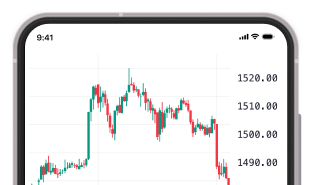
Analysts may study Bank Nifty charts to identify trends, patterns, and possible support or resistance levels. This can help in understanding how the sector is behaving over time.
Benefits & Risks of Investing in the Bank Nifty
After learning the Nifty Bank meaning, understanding the pros and cons of this index is also important. The table below explains some possible benefits and risks in a balanced manner.
| Benefits | Risks |
| Provides exposure to the banking sector, which usually forms a significant part of the economy. | The index focuses only on banking stocks, which can increase sector-specific risk. |
| Offers diversification across multiple banking companies instead of a single stock. | The index may react strongly to policy changes, regulations, or banking-sector developments. |
| Acts as a benchmark that can help evaluate market performance. | High volatility in derivatives trading may increase financial risk for market participants. |
| Generally offers liquidity through market-linked products, allowing easier participation and exit. | Leverage in futures and options trading could magnify both gains and losses. |
Disclaimer: All investments are subject to market risks, economic conditions, regulatory changes, and other external factors. Returns are not guaranteed and may vary based on market performance and investment tenure. Investors should assess their risk tolerance and financial objectives, conduct their own research, and consult a qualified financial advisor before making any investment decisions.
Conclusion
Bank Nifty represents the performance of major banking companies listed on the NSE and can help investors understand banking-sector trends and market behaviour. It may support analysis, benchmarking, and informed observation of price movements over time.
- BlinkX launches ItsATraderThing Campaign
- blinkX Introduces 'Options Watchlist' to Empower Traders with Real-Time Insights
- BlinkX Enhances Trading with 24/7 Customer Support Capabilities
- Unlocking Seamless Trading: Introducing “Order Slicing” For The FnO Market
- A Game-Changer for Traders: Introducing Horizontal Watchlists
FAQs on Bank Nifty
How to calculate Bank Nifty?
Bank Nifty is usually calculated using the method of free-float market capitalisation, with each stock carrying a specific weight based on its market value.
How to analyse Bank Nifty?
Individuals may analyse bank Nifty by checking price charts, studying news related to the sector, looking at economic news, and exploring useful technical indicators such as trends and support-resistance levels.
Who is the owner of Bank Nifty?
Bank Nifty is not owned by any one person as such; it is a stock market index generally owned and governed by India’s National Stock Exchange (NSE) through its index services division.
Which one is better, Nifty or Bank Nifty?
Nifty and Bank Nifty are different from each other. Nifty covers many sectors, while Bank Nifty generally includes only banking stocks. The suitability usually depends on an investor’s financial goal, risk comfort, and their interest in sector-based or broader market exposure.