
What is a Candlestick Chart?




- ▶<span lang="EN-US" dir="ltr"><strong>Key Components of a Candlestick</strong></span>
- ▶<span lang="EN-US" dir="ltr"><strong>How to Read a Candlestick Chart?</strong></span>
- ▶<span lang="EN-US" dir="ltr"><strong>Benefits of Using Candlestick Charts</strong></span>
- ▶<span lang="EN-US" dir="ltr"><strong>Conclusion</strong></span>
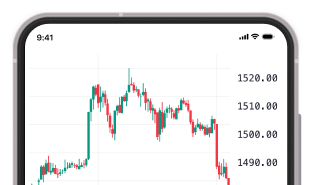
A candlestick chart is a pattern that shows how a stock’s price moves during a certain time. It is a common chart used by traders, as it clearly shows the opening price, closing price, and the highest and lowest prices for a day. These charts were first used hundreds of years ago by Japanese rice traders to study price changes.
Key Components of a Candlestick
After understanding what is candlestick charts, let’s find out what are the key components of candlesticks.
Component | Meaning |
| Open Price | The price at which the stock starts trading. |
| Close Price | The price at which the stock ends trading. |
| High Price | The highest price the stock reached during that time. |
| Low Price | The lowest price the stock reached during that time. |
| Body (Real Body) | The thick part of the candle that shows the difference between open and close prices. |
| Wicks (Shadows) | The thin lines on top and bottom that show the high and low prices. |
| Colour | Shows direction: green suggests that the asset's price went up, whereas red indicates the asset's price decreased. |
How to Read a Candlestick Chart?
Along with understanding the candlestick meaning, it is important for traders to know the correct method of reading a candlestick pattern. The process involves analysing the following.
Four Key Prices
- Candlestick charts show four important prices for a stock: open, high, low, and close.
- These prices help traders understand how the stock moved during that time.
Open Price
- The open price is the price at which the stock first traded.
- Example: If a stock started the day at ₹100, then ₹100 is the open price.
High Price
- The high price is the highest point the stock reached.
- This is shown at the top of the upper shadow (the thin line).
- If there is no shadow, the top of the body shows the high price.
- Example: If the stock touched ₹110 at its highest, that is the high price.
Low Price
- The low price is the lowest point the stock reached.
- This is represented at the bottom of the lower shadow.
- If there isn't any shadow, then the low is reflected at the bottom of the body.
- Example: If the stock dropped to ₹95, that is considered the low price.
Close Price
- The close price represents the price at which the stock ended the session.
- This closing price helps determine whether the candlestick is bullish or bearish.
Bullish Candlestick
- When the closing price of a candlestick is higher than its open price, that candle is considered bullish.
- Example: When the stock opens at ₹ 100 and closes at ₹ 108, then it is said to be a bullish candle.
Bearish Candlestick
- A candlestick is bearish when the close price is below the open price.
- Example: If a stock opens at ₹100 and closes at ₹92, this candle would be a bearish candle.
Candle Colours
- Coloured candlesticks are used to assist traders in determining whether the market was positive or negative.
- Green is often for bullish, whereas red is often for bearish.
Reading Multiple Candles
- By looking at many candlesticks together, traders started to develop an idea of the market mood-whether the buyers were stronger, or the sellers.
Disclaimer: The content above is for educational purpose only and does not constitute any investment advice.
Benefits of Using Candlestick Charts
Here are some benefits of using candlestick charts:
- Easy to Understand Price Movements A candlestick chart shows the opening, closing, high, and low prices in one graph. This shows visually to traders how the price moved for the day.
- Helps Identify Trends Candlestick patterns may assist traders in analyzing possible trends. The candles form certain patterns that help determine the direction of market trends.
- Shows Market Sentiment The colours and shapes of the candlesticks give insight into the emotions of buyers and sellers. Green candles indicate strong buying pressure, whereas red candles signify strong selling pressure.
- Works Well for Intraday and Long-Term Analysis Candlestick charts may be used in the trading of 5-minute or 15-minute charts and also on long-term aspects, such as a daily or even weekly chart.
Conclusion
Candlestick charts allow traders to gauge the stock price movement and buyer-seller activities. The chart graphically shows trends, reversals, and important signals.
- BlinkX launches ItsATraderThing Campaign
- blinkX Introduces 'Options Watchlist' to Empower Traders with Real-Time Insights
- BlinkX Enhances Trading with 24/7 Customer Support Capabilities
- Unlocking Seamless Trading: Introducing “Order Slicing” For The FnO Market
- A Game-Changer for Traders: Introducing Horizontal Watchlists
FAQs on Candlesticks Chart
Are the patterns of candlesticks reliable for trading decisions?
The candlestick patterns may be helpful but not fully accurate, so traders should always use them with other tools and indicators for trend confirmation.
Can I use candlestick patterns for intraday trading?
Traders may use candlestick patterns with intraday charts, such as 5-minute or 15-minute charts. They may spot quick price changes throughout the day.
What is the difference between a bullish and a bearish candle?
Typically, a bearish candle is red, as it indicates a fall in price. A bullish candle is usually green in colour, which means the price has increased.
How to use candlesticks?
Candlesticks show the price movements that traders use to monitor, find trends, and then subsequently find trade signals for either buying or selling.
Can beginners learn candlestick charts?
Yes, beginners can learn candlesticks with proper learning materials and practice. They could practise on virtual charts to assist them in their learning process.