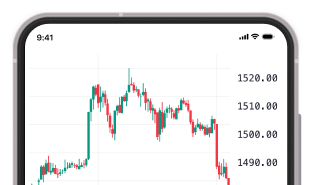
Nifty Midcap 50
₹-
0 (0%)
Nifty Midcap 50 Performance
Nifty Midcap 50 Historical Returns
Nifty Midcap 50 Sector Weightage
List of Nifty Midcap 50 Companies
| Company | Change% | Market Value |
|---|---|---|
| Ashok Leyland Ltd | -0.80% | 147.72 (-0.80%) |
| Bharat Forge Ltd | -1.98% | 1,798.60 (-1.98%) |
| GE Vernova T&D India Ltd | -0.86% | 3,925.00 (-0.86%) |
| Hero MotoCorp Ltd | 0.10% | 5,230.00 (0.10%) |
| Indian Hotels Co Ltd | -1.57% | 760.00 (-1.57%) |
| Max Financial Services Ltd | -1.07% | 1,281.00 (-1.07%) |
| SRF Ltd | -1.62% | 2,432.00 (-1.62%) |
| National Aluminium Company Ltd | -1.93% | 318.00 (-1.93%) |
| Hindustan Petroleum Corporation Ltd | 0.72% | 348.50 (0.72%) |
| Bharat Heavy Electricals Ltd | -1.67% | 427.35 (-1.67%) |
Market Cap
86639.35
87540.46
100399.77
104146.48
108180.85
147.72 (-0.80%)
1,798.60 (-1.98%)
3,925.00 (-0.86%)
5,230.00 (0.10%)
760.00 (-1.57%)
About Nifty Midcap 50
Parent Organization
Nifty Midcap 50
Exchange
NSE
What is the Nifty Midcap 50 Index?
The Nifty Midcap 50 Index represents 50 mid-sized companies listed on the NSE. These companies are bigger than small caps but smaller than large caps. The index tracks their performance to show how mid-cap stocks behave in the market. The Nifty Midcap 50 index is widely used as a benchmark for mid-cap funds and ETFs. Investors follow it to understand trends in the growing mid-cap segment.
Nifty Midcap 50 Index Stock Selection Criteria
The Nifty midcap 50 stocks list is chosen using clear rules:
- The company must be part of the Nifty Midcap 150 universe.
- Stocks are ranked by free-float market capitalisation (shares available to the public). The top 50 companies qualify, with preference for liquid stocks.
- The index is reviewed twice a year to replace underperforming or illiquid stocks.
- Regular review ensures the index reflects investable mid-cap companies consistently.
How is the Nifty Midcap 50 Index Value Calculated?
The index uses the free-float market capitalisation method. Only shares available to public investors are counted, excluding promoter or locked-in shares.
Formula:
Index Value = Index Market Capitalisation / Base Free Float Market Capitalisation of index * Base Index Value
where Index Market Capitalisation = Shares outstanding * IWF * Capping factor * Price
- IWF = 1 in case of indices computed based on full market capitalisation method
- Capping factor = 1 in case of uncapped indices
where Index market capitalisation is the aggregate of market capitalisation of each scrip in the Index adjusted for free float and/or capping factor depending upon the methodology; and Base index value is the initial value assigned to each index (For example 1000 or 100)
Example:
Step 1: Assume Base Details
Base Index Value = 1000
Base Free Float Market Capitalisation = ₹10,000 crore
(This is fixed at index inception)
Step 2: Assume Current Stock Data
Stock, Price (₹), Shares Outstanding (cr), IWF, Capping Factor
A, 200, 50, 0.60, 1
B, 500, 20, 0.75, 1
C, 100, 80, 0.50, 1
Since Nifty Midcap 50 is free-float & uncapped,
IWF < 1, Capping factor = 1
Step 3: Calculate Index Market Capitalisation (Stock-wise)
Stock A
50×0.60×1×200=₹6,000 crore
Stock B
20×0.75×1×500=₹7,500 crore
Stock C
80×0.50×1×100=₹4,000 crore
Step 4: Total Index Market Capitalisation
6,000+7,500+4,000=₹17,500 crore
Step 5: Apply the Index Formula
Index Value = Index Market Capitalisation / Base Free Float Market Capitalisation of index * Base Index Value
= 17,500/10,000×1000
=1750
Performance of Nifty Midcap 50 Index
The Nifty Midcap 50 index has shown strong long-term growth, though short-term volatility is common. Some recent trends:
- 1-year return: positive growth, reflecting short-term recovery.
- 3-year return: higher cumulative growth than many large-cap indices.
- 5-year return: substantial increase, showing mid-caps’ growth potential.
This demonstrates that mid-cap stocks can deliver higher returns over time, especially when the economy grows.
Factors to Consider Before Investing in Nifty Midcap 50 Index Stocks
Understanding the following factors helps to manage risk and expectations.
- Higher Volatility Risk: Mid-cap stocks vary more in value than large-cap stocks. They may appreciate or decline considerably in a relatively shorter time.
- Sector Concentration Risk: Performance may be impacted if the index or your investment has a large weightage in any particular sector.
- Economic Downturn Sensitivity: Mid-cap stocks perform relatively poorly in recession periods compared to large-cap equities.
- Liquidity Risk: Smaller market volumes compared to those of large-cap companies can make it difficult, at times, to sell or buy without influencing the market price.
Who Should Track or Invest in the Nifty Midcap 50 Index?
The Nifty Midcap 50 index can be suitable for:
- Long-term investors (5+ years).
- Those seeking mid-cap exposure beyond large-cap stocks.
- Passive investors using ETFs or index funds.
- Investors who can handle short-term volatility without panic.
- Conservative investors may find this index too volatile.
How Can You Invest in the Nifty Midcap 50 Index?
You cannot invest directly in the Nifty Midcap 50 index. However, exposure is possible via:
- ETFs tracking the index (easy to buy/sell on NSE).
- Index mutual funds (simple for systematic investing).
- Derivatives like futures and options (for experienced traders).
- Direct stock baskets of the 50 constituents (requires active management).
ETFs and index funds are relatively more straightforward methods for new investors.