Nifty Financial Services
₹-
0 (0%)
Nifty Financial Services Performance
Nifty Financial Services Historical Returns
Nifty Financial Services Sector Weightage
List of Nifty Financial Services Companies
| Company | Change% | Market Value |
|---|---|---|
| Max Financial Services Ltd | -0.96% | 1,309.70 (-0.96%) |
| State Bank of India | 2.03% | 959.10 (2.03%) |
| Shriram Finance Ltd | 2.53% | 940.45 (2.53%) |
| Cholamandalam Investment & Finance Company Ltd | 2.82% | 1,587.60 (2.82%) |
| Kotak Mahindra Bank Ltd | 1.38% | 441.00 (1.38%) |
| Bajaj Finance Ltd | 0.42% | 960.00 (0.42%) |
| LIC Housing Finance Ltd | 2.73% | 551.65 (2.73%) |
| HDFC Bank Ltd | 2.17% | 707.25 (2.17%) |
| ICICI Bank Ltd | 0.44% | 1,355.00 (0.44%) |
| Axis Bank Ltd | 1.13% | 1,259.10 (1.13%) |
Market Cap
45210.04
884399.77
221425.47
135365.57
437806.26
1,309.70 (-0.96%)
959.10 (2.03%)
940.45 (2.53%)
1,587.60 (2.82%)
441.00 (1.38%)
About Nifty Financial Services
Parent Organization
Nifty Financial Services
Exchange
NSE
Nifty Financial Services Index – Live Chart, Stocks List & Overview
What is the Nifty Financial Services Index?
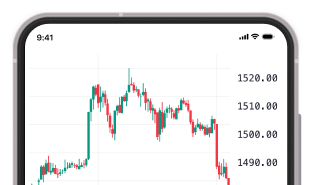
The Nifty Financial Services Index (FINNIFTY Index) refers to a sectoral index that represents the performance of companies from the financial services sector. The companies that come under this index are listed on the National Stock Exchange (NSE). The FINNIFTY live chart tracks the market movement of financial service stocks and provides investors with a benchmark to review the sector’s overall performance and trends.
Nifty Financial Services Index Stock Selection Criteria
The following points explain the stock selection criteria for the FINNIFTY index.
Nifty 500 Membership
Only companies that are part of the Nifty 500 Index are considered eligible for inclusion.
Sector Eligibility
Eligible companies must represent the financial services sector, including banks, financial institutions, housing finance companies, NBFCs, and other financial service providers.
Sub-Sector Weight Calculation
Within the eligible universe, the weight of each financial sub-sector is determined based on its average free-float market capitalisation.
Stock Selection Within Sub-Sectors
Companies are selected from each sub-sector in a manner that ensures the combined weight of selected stocks closely matches the sub-sector’s calculated weight.
F&O Preference
Preference is given to companies that are available for trading in the NSE Futures & Options (F&O) segment.
Free-Float Market Capitalisation Threshold
A company is included only if its average free-float market capitalisation is at least 1.5 times that of the smallest index constituent.
Stock Weightage Calculation and Caps
Stock weights are assigned based on free-float market capitalisation, subject to the following limits:
- Top three stocks are capped at 19%, 14%, and 10%, respectively
- Other stocks carry progressively lower weights than higher-weighted constituents
How is the Nifty Financial Services Index Value Calculated?
The Nifty Financial Services Index is calculated using the free-float market capitalisation method, which considers only shares available for public trading.
Formula:
Index Value = (Current Free-Float Market Capitalisation ÷ Base Market Capitalisation) × Base Index Value
Each company’s weight depends on its free-float market capitalisation, and stock weight caps are applied to avoid excessive concentration. The FINNIFTY price is updated in real time during market hours.
Performance of Nifty Financial Services Index
The Nifty Financial Services Index indicates the development of the financial sector in India, which is greatly connected with the economic growth, interest rates, and credit demand. In times of economic growth, the index tends to work well since lending increases, asset quality is better, and financial activity also increases. But when there is a slowdown in the economy or tight liquidity, the index may be pressurised. All in all, its performance reflects the stability and strength of the financial services industry as time goes by.
Factors to Consider Before Investing in Nifty Financial Services Index Stocks
The following are the key factors to consider before investing or tracking Nifty financial services share price.
- Sector Concentration: The index is heavily weighted towards banks and NBFCs, increasing exposure to one sector.
- Interest Rate Sensitivity: Changes in interest rates directly affect lending, borrowing, and profitability.
- Economic Cycles: Financial stocks tend to perform better during growth phases and weaken during downturns.
- Regulatory Risk: Policy changes and regulatory norms can impact business operations and margins.
- Market Volatility: Like all equity indices, it is subject to price fluctuations and market risk.
Who Should Track or Invest in the Nifty Financial Services Index?
The index would be appropriate to investors who seek specific exposure to the financial sector in India but not to any single stock. It can attract long-term investors who are optimistic about the expansion of banking and financial services and traders, who follow industry tendencies. Shareholders must be at ease with industry-related volatility and market cycles.
How Can You Invest in the Nifty Financial Services Index?
Investors cannot directly invest in the index unless they can do so through the following methods:
- Index Funds: These are passive funds that track the index’s composition and performance.
- ETFs: Exchange-traded funds which are sold and traded on the stock exchange just like shares.
- Derivatives: Futures and options contracts that are appropriate for advanced traders who require leverage or hedging.
The investment route is selected based on the levels of risk-taking, investment period, and trading experience.