
Naked Call Options: Meaning, How They Work, and Risk Management




- ▶What are Naked Call Options?
- ▶What is the Maximum Loss in Naked Call Positions?
- ▶Key Risks of Naked Call Options
- ▶How Can Traders Manage Risk in Naked Call Options?
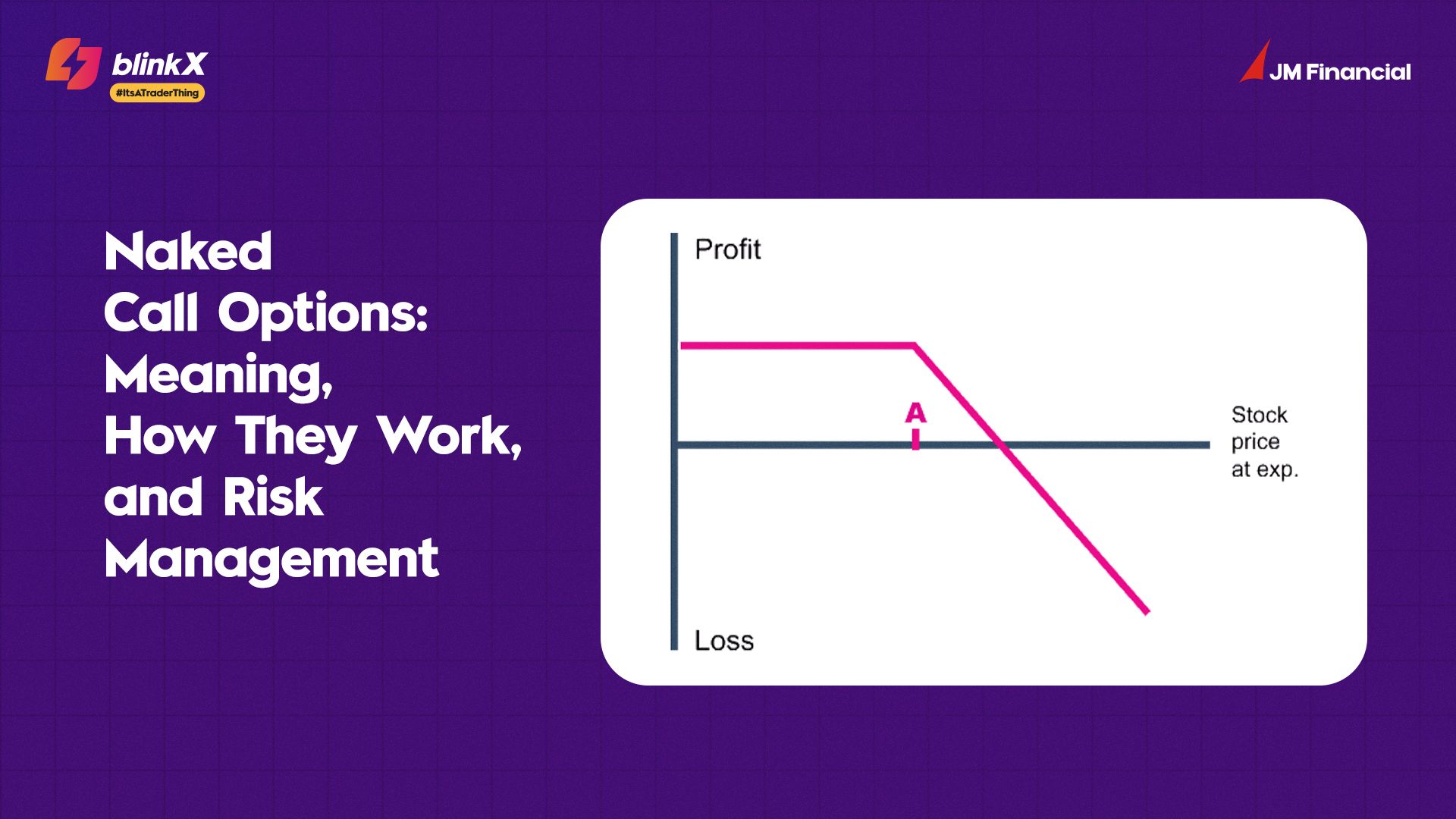
Naked call options is among the most complex options positions, and in understanding this position, one needs to have an understanding of the strategy and risks involved. When a trader enters into a call options contract by selling a call without owning the underlying asset, then it is called a naked call. Unlike other covered calls strategies, the investor does not own the underlying asset; hence, he faces all the risks. This article will provide information on what is naked call in options, the risk involved in naked calls, particularly maximum loss in naked call, and the strategies for managing the risks.
What are Naked Call Options?
In the case where a trader sells a call option, he will be obligated to deliver the underlying asset to the buyer at the previously agreed strike price in case the buyer decides to execute his rights under the contract. This can easily be done in a situation where the investor owns the underlying shares (covered call), but in the case of a naked call, he doesn’t.
This is what makes naked call options distinct. Premium is collected by the seller from the buyer when the option is written. The seller, however, is exposed to risk until the price of the underlying asset exceeds the strike price before expiry.
Understanding what is naked call in options also needs understanding how it is different from other options positions:
| Position Type | Does Seller Hold Underlying Asset | Risk Level |
| Covered Call | Yes | Limited to downside on shares held |
| Naked Call | No | Significant and open-ended on the upside |
| Long Call | Buyer holds contract | Limited to premium paid |
Naked call options are typically used by experienced traders with a clear view on market direction and a structured risk management framework already in place.
What is the Maximum Loss in Naked Call Positions?
The maximum loss in naked call positions is not capped. This is the defining characteristic of the strategy and the primary reason it requires careful handling.
When a trader sells a naked call, they collect an upfront fixed premium. That premium represents the maximum they can retain if the option expires without being exercised. However, if the underlying asset’s price rises significantly, the seller may be required to purchase those shares in the open market at the prevailing price and deliver them at the lower agreed strike price.
The further the market price rises above the strike price, the larger the potential obligation becomes. There is no ceiling on how high an asset’s price can go, which means the maximum loss in naked call positions has no defined upper limit.
This open-ended exposure contrasts sharply with long options positions where the buyer’s maximum loss is always limited to the premium paid. For naked call sellers, the premium collected is fixed and finite, but the potential downside is not.
Key Risks of Naked Call Options
Beyond the maximum loss in naked call positions, several other risk dimensions require attention:
Open-Ended Loss Exposure
As outlined above, the seller of a naked call faces obligations that grow with the underlying asset’s price. If prices rise significantly before expiry, the cost of fulfilling the contract at the strike price can far exceed the premium originally collected. This asymmetry between fixed income and open-ended obligation is central to understanding what is naked call in options from a risk perspective.
Margin Requirements and Liquidity
The brokers usually demand large margin deposits for traders with naked calls. The margin deposit is for the risk coverage throughout the period of the contract. With an increase in the margin requirement or illiquidity in the market, it can be difficult for the traders to adjust or exit the position at desired levels.
Volatility Sensitivity
Sudden increases in market volatility can affect the value of options contracts significantly, even when the underlying asset’s price has not moved dramatically. For naked call sellers, a spike in implied volatility increases the market value of the contract they have sold, creating mark-to-market losses even before any price movement occurs in the underlying asset. Monitoring volatility conditions is therefore an ongoing requirement when managing naked call options.
How Can Traders Manage Risk in Naked Call Options?
Several approaches are used by experienced market participants to manage the risks associated with naked call options:
Setting Clear Entry and Exit Criteria
Before entering a naked call position, experienced traders define the price levels and conditions under which they will act. Clear entry criteria based on market analysis and clear exit triggers based on predefined thresholds help avoid reactive decision-making when markets move unexpectedly.
Using Stop-Loss Orders
A stop-loss order is an instruction to exit a position if the market price reaches a specified level. For naked call options, stop-loss mechanisms can limit the extent of losses by triggering an exit before the position deteriorates further. Stop-loss orders reduce exposure but do not eliminate all risk, particularly in fast-moving or gapped markets.
Employing Hedging Strategies
Traders may use complementary positions to partially offset the risk of a naked call. Purchasing call options at a higher strike price, for instance, converts the naked call into a spread structure that caps the maximum potential loss. While hedging reduces potential income from the collected premium, it also limits the open-ended exposure that defines what is naked call in options at its most risky.
Position Sizing and Diversification
Limiting the ratio of the investment in naked call positions limits the effect of any one unfavorable movement. Position size management will ensure that each transaction has no outsized effect on the overall performance of the portfolio. The diversification of risks by having more than one security makes this possible. Regular Monitoring and Timely Adjustments Naked call positions require active management throughout their life. Regularly reviewing open positions, tracking changes in volatility and market conditions, and making timely adjustments such as rolling positions to later expiry dates or adjusting strike prices are all part of managing these positions responsibly.
Conclusion
Naked call options carry a risk profile that is substantially different from other options structures. The absence of an underlying asset holding means the seller’s exposure grows with the market rather than being capped. Understanding what is naked call in options and the nature of maximum loss in naked call positions is the foundation of managing this strategy responsibly. Clear entry and exit criteria, stop-loss discipline, hedging structures, and active position monitoring are the tools traders use to work within the risk parameters this strategy demands.
Disclaimer: The content in this article is provided for informational purposes only and does not constitute
- BlinkX launches ItsATraderThing Campaign
- blinkX Introduces 'Options Watchlist' to Empower Traders with Real-Time Insights
- BlinkX Enhances Trading with 24/7 Customer Support Capabilities
- Unlocking Seamless Trading: Introducing “Order Slicing” For The FnO Market
- A Game-Changer for Traders: Introducing Horizontal Watchlists
FAQs on Naked Call Options
What are naked call options and how are they different from covered calls?
Naked call options is selling a call option without holding the underlying asset. The seller collects a premium but carries open-ended exposure if the asset’s price rises above the strike price. Covered calls involve selling a call option while already holding the underlying shares, which limits the obligation to deliver.
What is the maximum loss in naked call positions?
The maximum loss in naked call positions has no fixed upper limit. While the seller collects a fixed premium upfront, the potential obligation grows as the underlying asset’s price rises above the strike price. There is no ceiling on how high an asset’s price can go, making the downside open-ended for the seller.
What is naked call in options from a margin perspective?
What is naked call in options from a margin standpoint involves significant margin requirements. Brokers require traders holding naked call positions to maintain substantial margin deposits to cover potential losses. These requirements can increase if market conditions change, and inadequate margin can result in forced position closures.
Does hedging eliminate all risk in naked call options?
No. Hedging reduces exposure by partially offsetting the risk through complementary positions such as purchasing a higher-strike call option to cap losses. However, hedging does not eliminate all risk and typically reduces the net premium income from the original position. It is a risk management tool, not a guarantee.