
Algorithmic Trading with Python: A Complete Guide




- ▶Why Use Python for Algorithmic Trading?
- ▶Key Advantages of Algorithmic Trading Using Python
- ▶Getting Started with Algorithmic Trading in Python
- ▶Advanced Topics in Algorithmic Trading
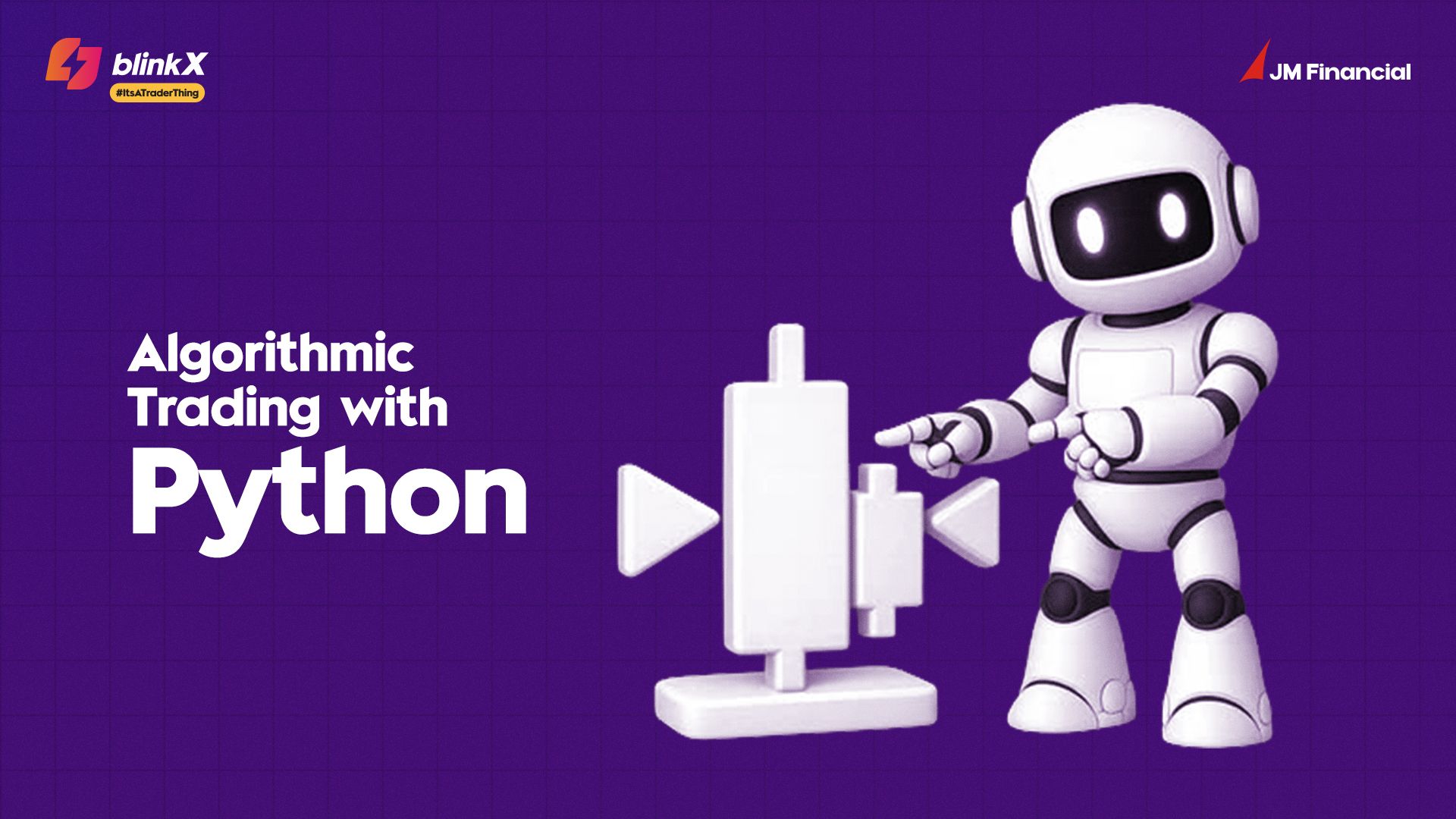
Manual trading has limitations because human reaction times are slower with delayed execution, and processing large volumes of data becomes almost impossible. Which is why algorithmic trading with Python makes it possible to process big data. Traders can place orders automatically on the basis of predefined rules instead of guesswork and emotional bias by converting trading logic into code.
Due to Python’s powerful libraries and simplicity, it has become a preferred language for building these systems. This article will explain why Python is the most preferred, how to get started, advanced techniques, and the resources required to build one’s skills.
Why Use Python for Algorithmic Trading?
Among retail traders and quants in India, Python has turned out to be the dominant language for algorithmic trading with Python.
Significance of Python
- It is simple syntax that's easier to learn than languages like C++ or Java.
- Python has a massive ecosystem of libraries built specifically for trading and data analysis.
- Due to its API-based automation, it is strongly supported by most Indian brokers.
- It is suitable for both rule-based strategies and machine learning-driven models.
As compared to other languages, Python trading strategies are very simple to test, design, and even refine for anyone trying to build anything ranging from a basic-trend following system to a complex predictive model. This accessibility is also why algo trading tools python has become a popular search term among beginners looking to get started.
Key Advantages of Algorithmic Trading Using Python
Using Python has many advantages and many traders rely on it for automated trading python systems:
- Powerful libraries: Tools like Pandas, NumPy, TA-Lib, and Scikit-learn make it easier to do data analysis, technical indicators, and machine learning.
- Easy broker integration: Majority of the broker APIs are adaptable with Python to allow quick trading.
- Backtesting support: Before going live, software such as Backtrader, QuantConnect, and Zipline will let you backtest your strategy.
- Strong community support: Multiple projects on GitHub, forums, and tutorials help to learn and understand.
- Scalability: You can start from easy stock strategies to more advanced multi-leg and high-frequency trading (HFT) strategies. With Python, traders can have all automation, flexibility, and performance in one place.
Getting Started with Algorithmic Trading in Python
Step 1: Set Up An Environment for Coding
One needs to maintain a reliable setup before writing down any code.
- Start the process by installing the recent version of Python 3.8 or above from the official website.
- For modern development, select a code editor including VS Code/PyCharm or Jupyter Notebook for exploring the data.
- For backtesting strategies, install important packages such as NumPy, TA-Lib, Pandas, Matplotlib and Backtrader or Zipline.
- To code directly within the browser instead of a local setup, the cloud-based alternative can be Google Colab.
This creates an environment for coding and testing before executing trading algorithms.
Step 2: Know the Basics of Trading Concepts
One must have a strong understanding about the markets and how they actually work before getting into the coding full-fledged.
- Have a clear understanding of different asset classes including the equity, futures and options which are traded on exchanges such as BSE and NSE.
- Know in detail about the order types like the market orders, limit orders, stop-loss, and cover orders.
- Learn about significant concepts that are volatility, liquidity, margin, leverage, and slippage.
- Be informed about SEBI’s most current regulatory guidelines including the algorithm approval and tagging norms for retail traders.
This important knowledge helps one align their strategy logic with compliance guidelines and market mechanics.
Step 3: Begin with Coding the First Strategy
Following the first two steps of setting up an environment and understanding the basics, you can then begin with writing down your first strategy.
How to build coding your first strategy:
- Pull historical data using libraries like yFinance or your broker's API
- Use Pandas to clean data and calculate technical indicators
- Define simple buy/sell conditions and print signals based on those rules
At this stage, the goal isn't profitability, but rather about understanding how your algorithm reacts to historical price movements.
Step 4: Backtest Your Strategy
Backtesting lets you assess your strategy on historical data before risking real capital.
What to use:
Libraries like Backtrader or Zipline to simulate past performance
What to evaluate:
Drawdown Sharpe ratio Win-loss ratio Risk-adjusted returns
You can start with testing the performance of your strategy for Indian markets during periods of high volatile market conditions, budget announcements or even RBI policy days. For realistic results, make sure to regularly account for brokerage fees, transaction costs, and slippage.
Step 5: Implement Your Strategy with API
Once backtested, it's time to go live using a broker API.
- Most brokerage firms have APIs available for live data feeds, trading orders, and portfolio tracking.
- Select an API with a proven track record and good documentation.
- Open a Demat and trading account with a broker who has API facility.
- Get API keys and securely connect to the server using Python.
Important safeguards to include:
- Retry logic for failed requests
- Connection error handling
- Position checks to avoid duplicate orders
As per SEBI's latest norms, any fully automated retail trading system must be tagged and routed through an approved broker platform.
Step 6: Risk Management
Risk management is what separates sustainable algo trading from costly mistakes.
- Implement stop losses, loss limit per day, and exposure limit within your code.
- To avoid connection issues, slippage, and delayed data, apply a strong error handling mechanism. Through real-time dashboards, continuously watch your system.
- Regularly optimize your Python code for reliability and efficiency.
- Comply with SEBI's current standards, such as algorithmic tagging and routing through registered brokers.
Advanced Topics in Algorithmic Trading
After learning and understanding the basics of algorithmic trading, you can further move on to the advanced topics to sharpen the skills.
Machine Learning
Machine learning helps in developing flexible strategies as opposed to inflexible rule-based strategies.
- The regression, decision trees, and random forest methods used in supervised learning models are useful in making predictions about the prices and their movements or buy/sell decisions.
- Unsupervised learning and reinforcement learning could be used to discover hidden patterns in the market.
- Python packages such as Scikit-learn, XGBoost, TensorFlow, and Keras enable developers to develop models.
- The models need constant retraining and validation to be effective in live markets.
High-Frequency Trading (HFT)
HFT refers to the implementation of multiple trade orders within seconds to gain the benefits of micro-scale price movements.
- Needs low latency technology and colocation services.
- In India, HFT is primarily practiced by institutions owing to technical and regulatory requirements.
- SEBI closely monitors HFT activity to maintain fair market access.
- Retail traders can't do true HFT but they can adopt faster intraday strategies through VPS services and API of brokers.
Sentiment Analysis
Sentiment analysis derives information from text-based sources such as news, social media, and earnings statements.
- Uses Natural Language Processing (NLP) to determine market sentiment.
- Large volumes of text processing is done using Python libraries such as NLTK, TextBlob, spaCy, and Transformers.
- For Indian markets, sentiment analysis on trends on Twitter, Reddit posts, or RBI/SEBI announcements can provide useful signals.
- Sentiment analysis should be used as a secondary indicator and not a substitute for technical or statistical analysis.
Conclusion: Algorithmic trading with Python technology has enabled ordinary retail traders to engage in data-driven trading as well, and is not just limited to institutions. Having the correct tools, knowledge about regulations, and proper risk management techniques has made it possible to build reliable trading systems. However, this is not only a matter of programming skills but also an ability to understand the markets while being patient and disciplined. Starting small and scaling gradually remains the smartest path forward.
- BlinkX launches ItsATraderThing Campaign
- blinkX Introduces 'Options Watchlist' to Empower Traders with Real-Time Insights
- BlinkX Enhances Trading with 24/7 Customer Support Capabilities
- Unlocking Seamless Trading: Introducing “Order Slicing” For The FnO Market
- A Game-Changer for Traders: Introducing Horizontal Watchlists
FAQs on Algorithmic Trading with Python
Why is algorithmic trading with Python preferred?
Python is preferred for algorithmic trading with Python because of its simplicity, vast libraries, and strong broker API support.
What are the Python libraries best for algo trading tools python?
Pandas, TA-Lib, and Backtrader used for backtesting and analysing data are some of the famous libraries best for algo trading tools python.
Do I need advanced coding skills to start automated trading python systems?
No, basic Python knowledge is enough to start, though advanced skills help with complex strategies.
Explain backtesting in Python trading strategies?
Backtesting in Python trading strategies means testing a trading strategy on historical data to analyze its performance before going live.
What SEBI guidelines are applicable for algorithmic trading with Python in India?
SEBI's current norms require algorithm tagging and routing trades through approved broker platforms for compliance.