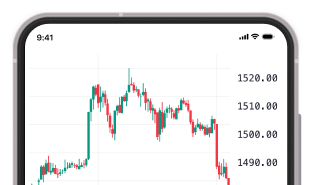
Nifty Auto
₹-
0 (0%)
Nifty Auto Performance
Nifty Auto Historical Returns
Nifty Auto Sector Weightage
List of Nifty Auto Companies
| Company | Change% | Market Value |
|---|---|---|
| Ashok Leyland Ltd | 0.49% | 154.19 (0.49%) |
| Bharat Forge Ltd | -0.82% | 1,926.00 (-0.82%) |
| Eicher Motors Ltd | -0.40% | 7,150.00 (-0.40%) |
| Hero MotoCorp Ltd | 0.63% | 5,241.00 (0.63%) |
| Mahindra & Mahindra Ltd | 0.07% | 2,950.00 (0.07%) |
| Bosch Ltd | 3.06% | 47,100.00 (3.06%) |
| Tata Motors Passenger Vehicles Ltd | 0.91% | 283.50 (0.91%) |
| Samvardhana Motherson International Ltd | 2.96% | 163.26 (2.96%) |
| Maruti Suzuki India Ltd | 0.76% | 11,967.00 (0.76%) |
| TVS Motor Company Ltd | 0.36% | 4,106.00 (0.36%) |
Market Cap
90662.94
93966.48
196147.13
104806.94
366517.69
154.19 (0.49%)
1,926.00 (-0.82%)
7,150.00 (-0.40%)
5,241.00 (0.63%)
2,950.00 (0.07%)
About Nifty Auto
Parent Organization
Nifty Auto
Exchange
NSE
Nifty Auto Index – Live Chart, Stocks List & Overview
What is the Nifty Auto Index?
The Nifty Auto Index tracks how automobile companies perform on the National Stock Exchange. It covers car makers, motorcycle manufacturers, heavy vehicle producers, auto parts suppliers, and tyre companies. The index includes up to 15 companies from the Nifty 500 based on their free-float market cap.
For anyone watching India's auto sector, the Nifty Auto index works as a reliable indicator. Auto sales move with the economy; when economic conditions weaken, purchases slow down. This connection makes the index relevant beyond just stock prices.
Nifty Auto Index Stock Selection Criteria
The selection process for the Nifty Auto Index follows a systematic methodology and is reviewed every six months.
1.Eligible Companies: Must be part of Nifty 500 at the time of review. If fewer than 10 auto companies qualify from Nifty 500, the deficit is filled from the top 800 companies ranked by trading volume and market capitalisation.
2.Sector Match: Only automobile sector companies are eligible; four-wheelers, two and three-wheelers, auto parts, and tyres.
3.Trading Activity: Companies must maintain 90% trading frequency over six months, ensuring consistent market presence.
5.Listing Requirement: A minimum listing history of one month is required, allowing newer companies to be considered relatively quickly.
6.Final Cut: The 15 companies with the highest free-float market cap are selected. Free-float refers to shares available for public trading, excluding promoter holdings.
7.Rebalancing: The index is rebalanced twice annually using data up to January 31 and July 31. Changes are implemented after a four-week notice period.
How is the Nifty Auto Index Value Calculated?
The Nifty Auto share price calculation uses free-float market cap weighting. Here's the formula:
Index Value = (Current Free-Float Market Cap ÷ Base Market Cap) × Base Index Value
The Nifty Auto index started with a base value of 1000 on January 1, 2004. It updates in real-time during market hours.
Each company's weight depends on the number of shares available for public trading multiplied by the share price. The combined values of all 15 companies determine the index value.
Weight distribution is capped to prevent excessive concentration. A single stock cannot exceed 33% weight, and the top three together are limited to 62%. This capping mechanism is reviewed on a quarterly basis.
Performance of Nifty Auto Index
The automobile industry is an economy-sensitive sector. As a result, when a country’s GDP is rising and employment levels are high, demand for automobiles increases. Countrywide economic downturns also lead to a reduction in sales of automobiles due to a decline in spending on car purchases
During growth phases, the entire value chain gets a boost, ranging from manufacturers to component suppliers. Yet the industry experiences some challenges. Prices for fuel keep fluctuating, emissions standards get stringent, electric cars are redefining the industry and more.
Economic downturns impact the industry more seriously, as car buying is a discretionary activity. Buyers can easily postpone their purchase plans. Big companies typically overcome tough times, as their product profiles and financial bases are more diversified.
With time, the Nifty Auto chart shows the trend in the industry, whether it's EVs, consumer behaviour, or any shift in government policies.
Factors to Consider Before Investing in Nifty Auto Index Stocks
Consider the following factors before investing in Nifty Auto Index.
1.Cyclical Pattern: Car sales tend to vary depending on economic conditions. If there is a slowdown, it can result in significant drops.
2.Regulations: Extremes in emission standards and EV mandate policies may require significant capital investments.
3.Input Costs: Steel and oil price variations affect margins, particularly for companies with limited pricing power.
4.EV Disruption: The electric vehicle transition is underway. Companies that adapt quickly tend to perform better than those relying on traditional models.
5.Heavy Concentration: Despite capping rules, a few large participants drive most index movements.
6.Market Risk: Like all equity indices, there's no downside protection. The index declines when markets fall.
The Nifty Auto index today provides focused sector exposure, but comes with sector-specific risks.
Who Should Track or Invest in the Nifty Auto Index?
This index may be suitable for investors who:
1. Seek focused exposure to the automobile sector without selecting individual stocks
2. Hold a positive long-term outlook on India's vehicle market growth
3. Can tolerate volatility and maintain positions through market cycles
4. Prefer thematic investing as part of a diversified portfolio
5. Want exposure to trends such as rising vehicle ownership or the electric vehicle transition
The index serves both retail and institutional investors, though understanding auto sector fundamentals is important. Returns tend to be cyclical rather than linear, with periods of both strong gains and notable declines.
How Can You Invest in the Nifty Auto Index?
Direct investment in the Nifty Auto index is not possible, but three main routes provide exposure:
1. Index Funds: These funds replicate the index composition and aim to deliver returns aligned with the index performance. They are appropriate for long-term investors seeking simplicity.
2. ETFs: Exchange-traded funds can be sold and bought on the stock exchange during market open hours, like individual stocks. They are much more flexible for active investors.
3. Derivatives: Futures and options contracts allow for leveraged positions or hedging strategies. These are instruments that need market experience, so experienced traders find them generally suitable.
The choice depends on the investment time, risk tolerance, and active-passive management preference.