
What is a Commodity Swap?




- ▶Understanding Commodity Swaps
- ▶Types of Commodity Swaps
- ▶How Do Commodity Swaps Work?
- ▶Benefits of Commodity Swaps
- ▶Risks and Challenges of Commodity Swaps
- ▶Commodity Swap Example
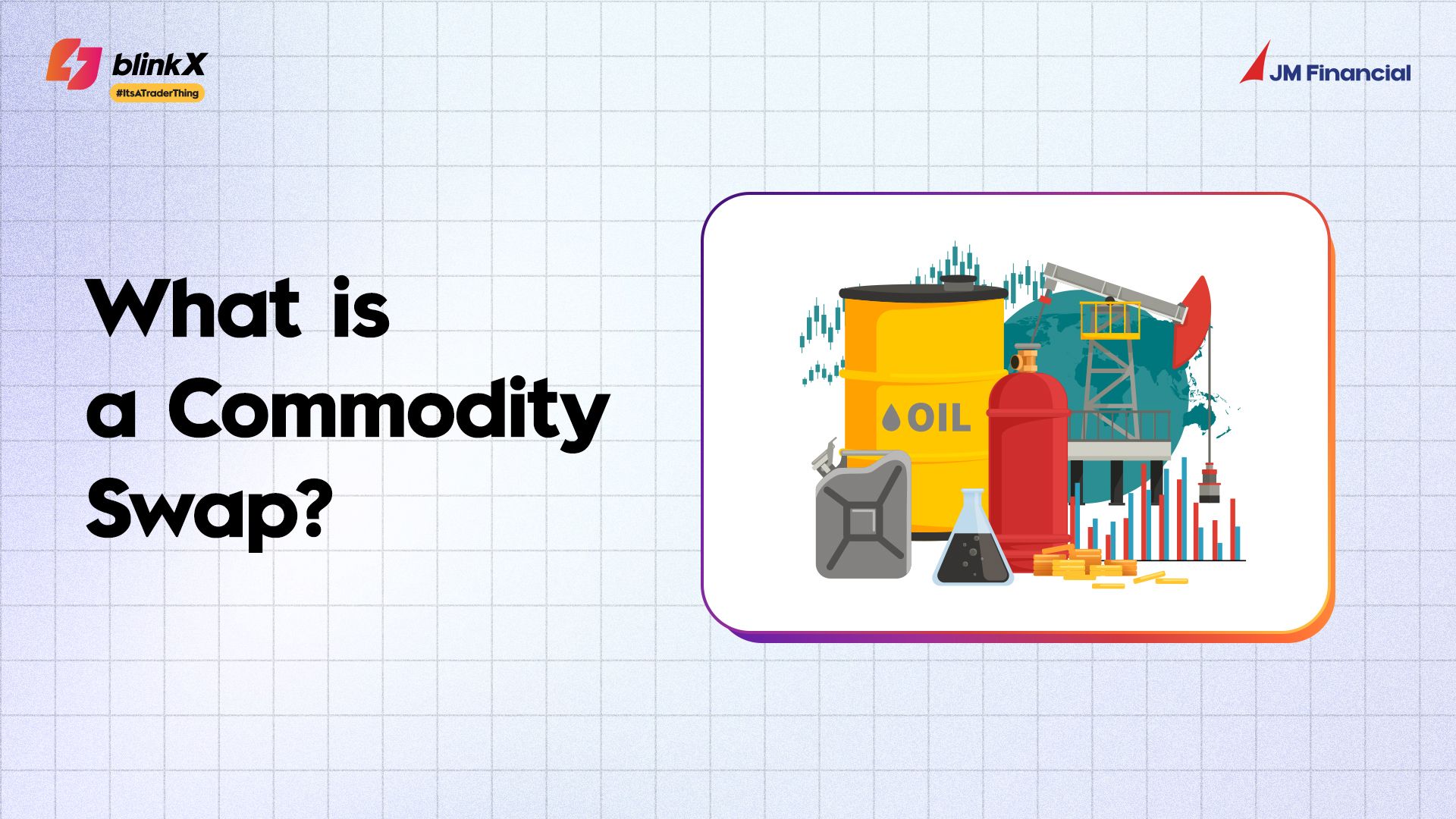
A commodity swap is a type of derivative contract which involves two parties agreeing to exchange cash flows that depend on the price of an underlying commodity. Commodities are used by businesses as a means of hedging against price volatility, providing stability of cash flows, and controlling operational expenses. Be it a producer who wants to protect themselves from price drops or a consumer who needs to fix costs from rising prices, learning about commodity swaps, types of commodity swaps, and pricing of commodity swaps becomes important for risk management.
Understanding Commodity Swaps
A commodity swap is a derivative contract in which two counterparties enter into an agreement that involves the exchange of cash flows determined by the price of a particular underlying commodity over a certain period of time. In this case, one counterparty pays a fixed price for the commodity, while the other pays a floating price based on the market price of the commodity.
Why is it important to have commodity swaps?
- Businesses benefit from the fact that they can safeguard themselves from adverse shifts in the prices of the commodities they deal in.
- The contracts enable businesses to agree on the prices of commodities before they trade them.
- They enable investors to diversify their portfolios through investments in commodity derivatives without owning any physical assets.
- They are not traded on exchanges but rather over-the-counter (OTC), which makes them less expensive.
Commonly traded commodities in swap transactions include physical commodities like gold, crude oil, and natural gas as well as soft commodities like wheat, coffee, corn, and sugar.
It is important to differentiate between commodity swaps and other types of commodity derivatives. Futures are standardized contracts for the delivery of a commodity in the future, traded on exchanges. Options confer the right but not the obligation to purchase or sell a commodity at a certain price and time. Swaps are, however, cash flow exchanges according to commodity prices over a period of time.
Types of Commodity Swaps
There are four main types of commodity swaps:
Type | Structure | Primary Use |
| Fixed-For-Floating | One party pays fixed; other pays floating market price | Hedge against price volatility |
| Floating-For-Floating | Both parties pay floating rates based on different benchmarks | Manage basis risk between two commodities |
| Fixed-For-Fixed | Both parties pay predetermined fixed prices | Specific, niche contractual arrangements |
| Commodity-For-Interest | One party pays commodity-linked rate; other pays fixed or floating interest | Hedge combined commodity and interest rate risk |
How Do Commodity Swaps Work?
Commodity swaps are executed over the counter between two parties, typically with a financial institution facilitating the arrangement. In most cases, the parties do not exchange the physical commodity. Instead, they settle the difference between the fixed and floating prices in cash.
Settlement Methods:
Settlement Type | How It Works | Best Suited For |
| Cash Settlement | Net cash payment reflecting the price difference between fixed and floating rates | Most corporate hedging arrangements |
| Physical Settlement | Actual delivery of the underlying commodity | Companies that need to physically hold or use the commodity |
Physical settlement is more complex and costly due to logistics, storage, transportation, and quality control requirements. Cash settlement is the more widely used approach.
Pricing Considerations:
The fixed price in a commodity swap is determined by several interconnected factors:
- Forward Curve: The forward price expected in the future for the commodity by considering the forward market determines the fixed price.
- Swap Duration: For a long duration of swap, fixed price would be high due to risks involved during the period.
- Interest Rates: The future cash flows are discounted at present value by means of appropriate interest rates with risk free rate being an important parameter in pricing.
- Hedging Costs: The liquidity of the commodity market determines the hedging costs and hence the fixed price.
- Other Factors: Seasonality of the commodity, structure of the market, and credit risk of the counterparties have bearing on pricing.
Market Benchmarks:
Benchmarks are reference prices that help determine commodity values in swap contracts:
- Henry Hub: Main benchmark in North America for natural gas prices and an important benchmark globally for pricing LNG. Frequently utilized in natural gas commodity derivatives.
- WTI Crude Oil: West Texas Intermediate is an important crude oil benchmark utilized in derivative contracts and swaps, primarily in North American markets.
- Brent Crude Oil: Most popular benchmark in the world when it comes to oil prices, including Europe, Africa, and the Middle East.
Also Read: Difference Between Swap and Option
Benefits of Commodity Swaps
Commodity swaps deliver several practical advantages for both producers and consumers of commodities:
- Hedging Against Price Volatility:
Through the agreement on a fixed price, firms are hedged against unexpected increases in price levels. At the same time, committing to pay floating rates that depend on the current market price level guarantees that the firm will gain from lower prices if they occur.
- Predictable Cash Flows:
Probably one of the main benefits of the commodity swap is predictable cash flow. By entering into an agreement on the level of prices in advance, companies receive an opportunity to more accurately predict future expenses and revenues, which helps them budget and plan effectively. In addition, by paying floating rates, the company will also gain from falling commodity prices.
- Risk Management:
Consumers and producers use commodity derivatives to manage risks associated with fluctuating prices in a systematic way. The conversion of variable cash flows into fixed ones provides an opportunity to develop a risk management strategy suitable for particular market conditions.
Risks and Challenges of Commodity Swaps
Commodity swaps carry certain risks such as:
- Counterparty Risk and Credit Exposure:
Counterparty risk exists if one of the parties does not honor their obligations. In case the parties have decided on the payment of the fixed price but fail to deliver the commodity or the cash flows, then this could expose the company to financial loss and operational disruptions. The risk of this happening can be reduced by making sure that there is collateral to secure the swap agreement.
- Market Risk from Price Fluctuations:
Market risk is an inevitable part of commodity swap. In case the parties involved agree to make payments at the fixed price and the market price goes down, then this means that one of the parties will end up paying a higher price than the market price. When the parties are paying a floating price, a drastic rise in prices will mean an increase in the cost of the swap.
Commodity Swap Example
To illustrate how a commodity swap works in practice, consider the following commodity swap example.
An airline enters into a commodity swap agreeing to pay a fixed rate of Rs. 1,000 per gallon for its fuel requirements of 100 gallons. At the payment period, the market price of fuel has risen to Rs. 1,200 per gallon.
Under the swap:
- The airline pays Rs. 1,000 per gallon as agreed
- The counterparty pays the difference of Rs. 200 per gallon to the airline
- Total saving for the airline: Rs. 200 x 100 gallons = Rs. 20,000
The airline successfully offsets the increase in fuel costs, maintains stable operating margins, and ensures predictable cash flows regardless of what the market price does. This is the core practical value of a commodity swap for any business with significant commodity price exposure.
Conclusion
Commodity swap is one of the most effective mechanisms for dealing with price uncertainty of commodity risk for business firms and investors. It allows them to hedge profit margin, make sure of stable cash flows, and minimize the effects of volatility on their business activities. Knowing the types of commodity swaps, pricing of commodity swaps, their benchmarks, and commodity swap risks is important for any person who wants to use commodity derivatives for his/her business purposes. When commodity swaps are used properly, it is an effective mechanism for converting market uncertainty into financial certainty.
- BlinkX launches ItsATraderThing Campaign
- blinkX Introduces 'Options Watchlist' to Empower Traders with Real-Time Insights
- BlinkX Enhances Trading with 24/7 Customer Support Capabilities
- Unlocking Seamless Trading: Introducing “Order Slicing” For The FnO Market
- A Game-Changer for Traders: Introducing Horizontal Watchlists
FAQs on Commodity Swap
What is a commodity swap in simple terms?
Commodity Swap involves the exchange of cash flows of a commodity between two parties. One party usually pays a fixed price whereas the other party pays a floating price depending upon the market price.
What is a commodity swap example?
A commodity swap example is suppose an airline enters into a commodity swap and receives a fixed price of Rs. 1,000 per gallon of fuel from the counterparty. In case the market price increases to Rs. 1,200 per gallon, the counterparty pays the airline the difference of Rs. 200 per gallon, so as to keep the airline safe from increasing price and stabilizing its operational cost.
What are the types of commodity swaps?
Some of the different types of commodity swaps include fixed for floating swap which is basically one of the most common type, wherein one party pays a fixed price and other party pays a price dependent on market rates; floating for floating swap, wherein both the parties pay floating prices which depend upon the rate of some benchmark; fixed for fixed swap which is a less common type and lastly, commodity for interest swap
What are the risks of commodity derivatives like swaps?
The major risks involved with commodity swaps are: counterparty risk, which is a risk due to non-performance by either of the parties and market risk due to unfavorable movement of commodity prices.