
Mistakes in Commodity Trading




- ▶What Is Commodity Trading?
- ▶Common Mistakes in Commodity Trading
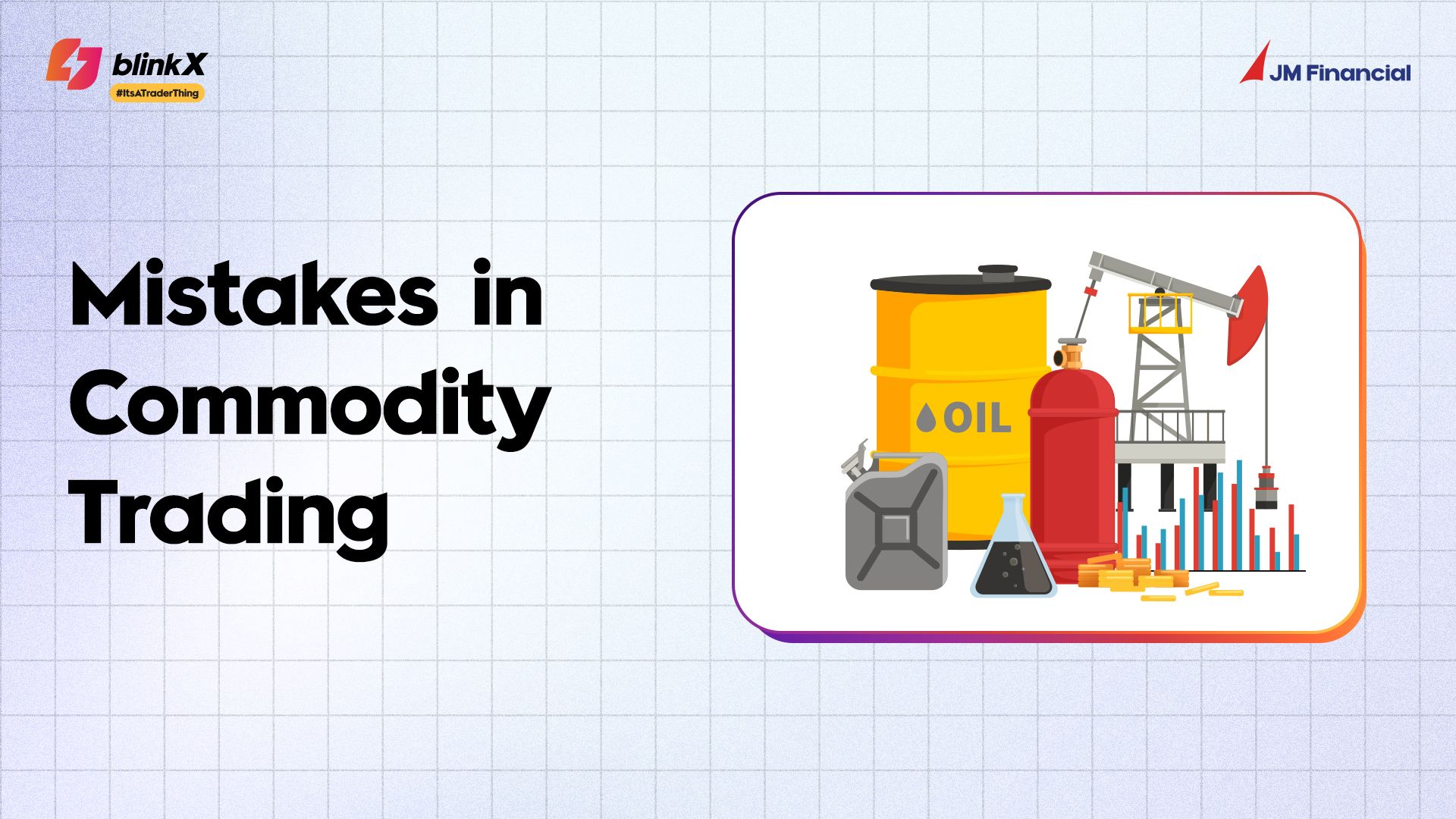
Commodity trading provides some amazing opportunities, however, it is an area where minor mistakes could cost a trader a lot. From forgetting to use stop losses to getting emotional about your trades, the mistakes in commodity trading made while beginning your trading journey can be preventable by being aware.
Commodities trading of gold, crude oil, agriculture products among others through exchanges like MCX and NCDEX is not only about market knowledge, it is about planning too. This article has listed some of the most common trading errors commodities traders make while trading in commodities and how risk management commodity trading strategies can help avoid them.
What Is Commodity Trading?
Commodity trading is all about trading in raw materials and primary goods, via futures contracts listed on MCX and NCDEX. The commonly traded commodities include gold and silver considered as the precious metals, wheat and soybean that comes under agricultural products, and energy commodities like natural gas and crude oil. Traders must have a strong market understanding as well as a clearly thorough trading plan to avoid making the most frequent mistakes in commodity trading.
This article will help you know the most common trading errors commodities traders make and how to fix them.
Common Mistakes in Commodity Trading
Going Against the Market Trend
One of the most common mistakes in commodity trading is when a trader tries to trade against the market trend and predict reversals.
Why this is risky:
- Unlike what most traders expect or predict, the market can continue to trend for a long period.
- Shorting the momentum trade without seeing any signs of reversal could cause continuous losses.
How to avoid it:
- Use simple trend indicators such as moving averages, price pattern, and volume.
- Check the strength of the trend with the help of indicators like RSI (Relative Strength Index) and MACD.
- Look for trading against the trend only after seeing strong reversal confirmation signals.
Not Managing Stop-Loss Orders
The stop-loss is a predefined exit level which is used to limit your losses. However, most beginners tend to avoid taking this step.
The problem:
- Monitoring your trades manually without any stop-loss level will lead to bigger losses.
- Decision making with emotions will play a role and delay your exit.
The fix:
- Use automated stop-loss orders available on most trading platforms.
- Don’t set your stop-loss after entering the trade, make sure to do it before entering the trade.
This single habit plays a major role in effective risk management commodity trading strategies.
Overlooking Position Sizing
Trading large volumes without understanding your actual exposure is one of the more dangerous trading errors commodities traders make.
Why it matters:
- Oversized positions can wipe out a significant portion of your capital during unfavourable price moves.
- Position size should always be calculated based on your total capital, not just market opportunity.
Best practice:
- Limit position size to 1–2% of your total capital per trade.
- As per the volatile situations and account size, adjust the lot sizes.
Overtrading
When a trading takes place out of emotional triggers such as FOMO (fear of missing out) or revenge trading after facing a loss is called overtrading.
Common signs of overtrading:
- Entering multiple trades in a single day without a clear strategy. Trying to "make up" for previous losses through frequent trades.
- Ignoring transaction costs that pile up with excessive trading. How to fix this: Stick to a predefined trading plan.
- Set the number of trades to the maximum every day. Avoid trading purely based on emotional impulses.
Ignoring Trading Timings
Each commodity has a given specific trading hour which differs on the basis of the commodity itself and the exchange. Overlooking the trade timings affect the trade which is considered as one of the most common mistakes in commodity trading.
Why timing matters:
- There are wide variations in liquidity and volatility throughout the day.
- Taking or closing trades at times of poor liquidity results in bad execution.
Example:
Many crude oil traders prefer trading around the US market opening hours, since liquidity tends to be higher during this window.
Ignoring Risk Management
Commodity markets are very volatile due to the nature of factors such as changes in demand and supply, and geopolitical risks. The biggest mistake one can make in commodity trading is failure to employ risk management commodity trading.
Key risk management strategies:
- Use hedging techniques to offset potential losses
- Apply stop-loss orders consistently
- Avoid excessive leverage
- Diversify your portfolio across multiple commodities
- Maintain a favourable risk-to-reward ratio on every trade
Not Understanding Expiry and Rollovers
Every futures contract comes with an expiry date, and failing to track this is a frequent trading error among commodity traders.
What can go wrong:
- Missing the expiry date can lead to automatic square-off of your position.
- Rollover charges may apply if you don't manage your position properly.
What to do instead:
- Track contract expiry dates closely.
- Manually review rollover deadlines, since rollovers aren't automatic on all platforms.
Ignoring Contract Specifications
Failure to analyze the specifications of the contract is another mistake many traders make.
What you need to check before trading:
- Margin requirements
- Lot size
- Delivery terms
- Associated costs
Pro tip:
Always refer to exchange-issued product notes for accurate and updated contract details.
Emotional Trading
The act of letting emotions like fear, greed or panic dictate the decision-making process is arguably one of the biggest mistakes one can make in the commodity markets.
Why it's harmful:
- Using emotions to make trades causes irrational choices.
- This typically ends up in covering losses or cashing out gains too soon.
How to stay objective:
- Analyze your position before engaging in a trade.
- Keep a trading log/checklist to document the decision process.
- Apply logic in your decision making process.
Holding Positions Overnight Without Planning
Failing to evaluate the risks associated with positions that have been carried over into the night is an error that is committed by many traders who ignore this important factor.
Risks of unplanned overnight positions:
- Exposure to global events and news that occur outside trading hours.
- Gap risk, where prices open significantly different from the previous close.
- Lower liquidity, especially for commodities influenced by international markets.
What to do instead:
- Only hold overnight positions after evaluating these risks.
- Adjust your stop-loss accordingly.
- Factor in potential changes to overnight margin requirements.
Also Read: Intraday Trading Strategies & Tips
Conclusion
Discipline, planning, and risk management are keys to avoid some of the common mistakes in commodity trading that traders make while trading commodities. Even something as simple as using a stop loss or being aware of the specification of the contract could help in reducing trading errors commodities traders usually make in the commodities markets
- BlinkX launches ItsATraderThing Campaign
- blinkX Introduces 'Options Watchlist' to Empower Traders with Real-Time Insights
- BlinkX Enhances Trading with 24/7 Customer Support Capabilities
- Unlocking Seamless Trading: Introducing “Order Slicing” For The FnO Market
- A Game-Changer for Traders: Introducing Horizontal Watchlists
FAQs on Mistakes in Commodity Trading
Which common mistakes in commodity trading take place?
The common mistakes in commodity trading are overtrading, ignoring stop-losses, avoiding risk management, and poor position sizing.
What is the significance of risk management commodity trading?
Through risk management, it helps to reduce losses with tools such as hedging, stop-losses, and avoiding excessive leverage.
What trading errors commodities traders should avoid the most?
The traders should avoid overtrading, ignoring contract specifications, and emotional decision-making.
What is the importance of the expiry dates for commodity trading?
Omitting expiry dates may result in automatic square-off and rollover costs.
Is it advisable to keep commodity positions overnight?
Only if you've assessed overnight risks like gap movements, low liquidity, and adjusted your stop-loss accordingly.