
What Are Offsetting Transactions?




- ▶Offsetting Transactions Meaning
- ▶How Offsetting Transactions Work?
- ▶Examples of Offsetting Transactions
- ▶Role in Derivatives Trading
- ▶<strong>Benefits of Offsetting Transactions</strong>
- ▶<strong>Risks and Limitations</strong>
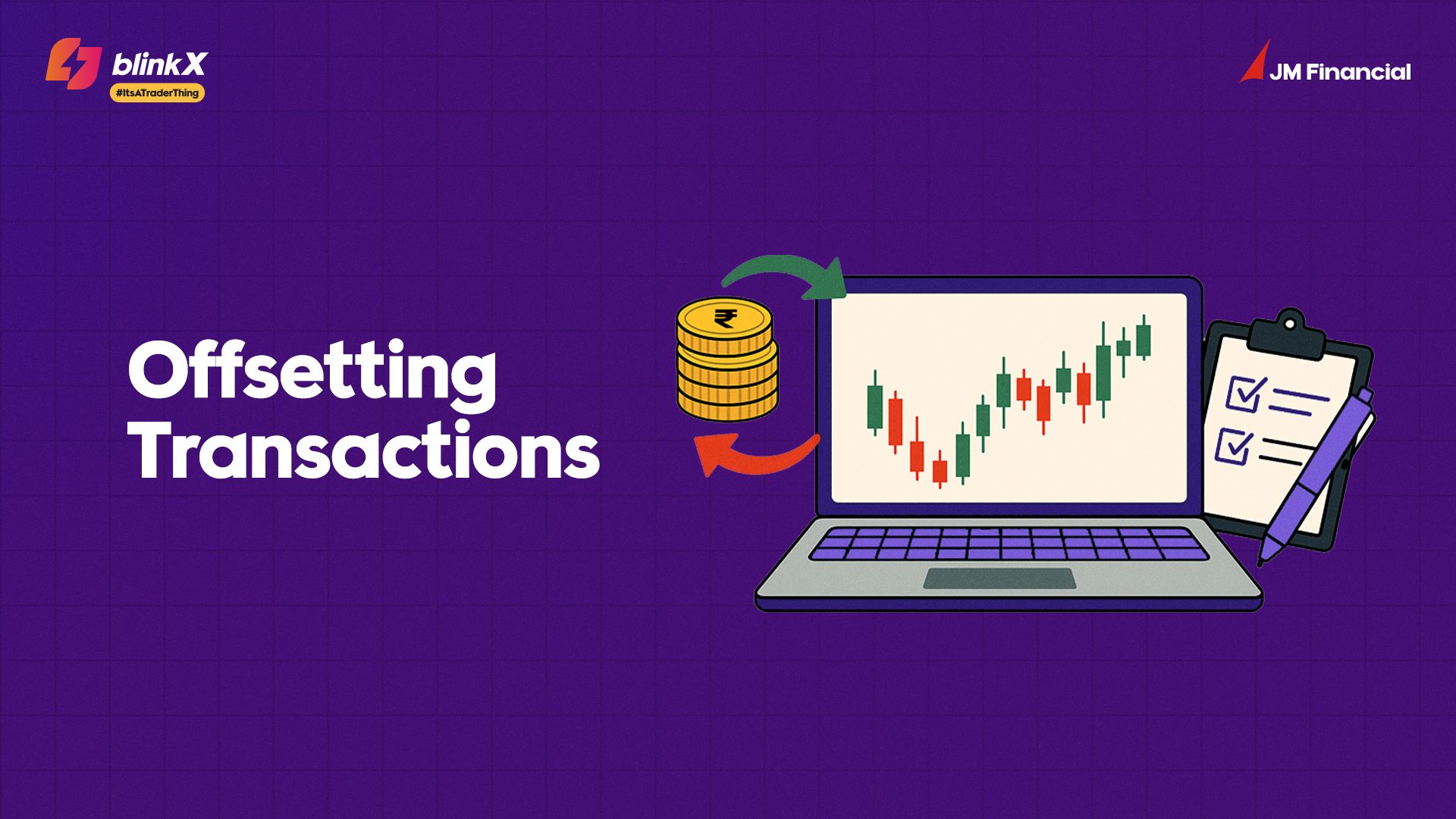
In the financial market, traders may take entry and exit positions without considering the expiry date of the contract. Offsetting transactions are some of the most common strategies used when exiting a position in the market. This is because the use of offsetting transactions helps the trader lock in his gains, mitigate any risks, or cut his losses by taking the opposite position in the financial product he is using.
Offsetting Transactions Meaning
An offsetting transaction is a trade that negates or neutralizes an existing position by assuming an equal and opposite position in the asset in question.
Examples include:
- If the trader takes a long position in a futures contract, an offsetting transaction would entail selling the identical futures contract.
- If the trader takes a short position in a futures contract, an offsetting transaction would involve buying the identical futures contract.
This type of transaction is undertaken with the objective of minimizing future risk.
How Offsetting Transactions Work?
The process of offsetting transactions involves the establishment of an opposing position that equals the initial transaction.
For example:
- An investor purchases one contract of futures for stocks.
- An investor then sells the same number of futures contracts.
- Both transactions cancel each other out.
- There is no risk from any future price movements anymore.
The gain or loss depends on the difference between the opening and closing prices. This method is popular among derivatives traders.
Examples of Offsetting Transactions
Illustrative examples may help us comprehend offsetting transactions.
Example 1: Futures Contract
An investor enters into a futures contract for ₹1,000.
Purchase Price: ₹1,000
Selling Price: ₹1,100
The investor takes a contrary action and sells the contract to earn a profit of ₹100 per unit.
Example 2: Short Sale
An investor sells a futures contract for ₹500.
Sale Price: ₹500
Purchase Price: ₹450
The investor purchases the contract again and earns a profit of ₹50 per unit.
Example 3: Stock Market
An investor makes a purchase in the stock market and later makes a sale of an equivalent amount.
Role in Derivatives Trading
Offsetting transactions play a critical role in derivatives markets because most traders do not hold contracts until expiration.
In futures and options trading, traders frequently use offsetting transactions to:
- Lock in profits
- Minimize losses
- Manage market exposure
- Adjust trading strategies
- Exit positions before expiry
To better understand the instruments where offsetting transactions are commonly used, investors can explore what are equity derivatives?.
Derivative traders often combine offsetting transactions with various risk management techniques and option trading strategies to improve their trading outcomes.
Offsetting transactions are important in derivatives because few people keep positions till maturity in derivatives markets.
The following are some reasons why traders use offsetting transactions in futures and options:
- Realize profit
- Reduce losses
- Limit risks
- Reevaluate trading strategy
- Exit positions prior to maturity
For further insight on the derivatives in which offsetting transactions are common, investors can explore what are equity derivatives.
Derivative traders often combine offsetting transactions with various risk management techniques and option trading strategies to improve their trading outcomes.
Benefits of Offsetting Transactions
There are many benefits associated with using offsetting transactions for trading and investment.
Risk Management
They enable the trader to mitigate risk by minimizing exposure to the markets.
Gains Booking
A trader is able to book gains even before reaching the end of the trading period.
Flexibility
The trader is able to reposition himself according to market trends.
Liquidity
Offsetting transactions increase market efficiency through active trading.
Efficient Use of Capital
A trader can close his position and reinvest in other securities.
Risks and Limitations
Offsetting deals do offer some drawbacks despite their wide application.
- Market Risk
Unanticipated fluctuations in the price until the execution of offsetting may impact the bottom line.
- Liquidity Risk
A matching counterpart might be hard to come by in illiquid markets.
- Transaction Costs
Charges such as brokerage costs and taxes may result in reduced gains.
- Execution Risk
There is no guarantee that the offsetting deal will be executed at the desired price.
- Inadequate Hedge
An offsetting transaction may sometimes fail to offset the risk completely because of mismatch in the terms of the contracts.
This implies that traders need to assess market dynamics before depending entirely on offsetting.
- BlinkX launches ItsATraderThing Campaign
- blinkX Introduces 'Options Watchlist' to Empower Traders with Real-Time Insights
- BlinkX Enhances Trading with 24/7 Customer Support Capabilities
- Unlocking Seamless Trading: Introducing “Order Slicing” For The FnO Market
- A Game-Changer for Traders: Introducing Horizontal Watchlists
FAQs On Offsetting Transactions
What is an offsetting transaction?
An offsetting transaction is a transaction that offsets the open position by making the opposite transaction in the same security or derivative instrument. An offsetting transaction is widely used for closing positions and hedging market risk.
Why are offsetting transactions used?
Offsetting transactions help traders realize profits, control losses, hedge against market risks, and close their positions prior to expiration of a contract. Offset helps traders manage their investments more effectively.
How do offsetting transactions work in futures?
In futures trading, a long position can be closed by selling the futures contract. On the other hand, a short position can be closed by purchasing the futures contract.
Are offsetting transactions risk-free?
Although offsetting transactions are useful in hedging and closing open positions, there is no guarantee that they are totally risk free. Some types of risks that might accompany the offsetting transaction include execution risk, liquidity risk, and transaction cost.