
Exotic Options




- ▶What Are Exotic Options? - H2
- ▶Exotic Option vs Traditional Option
- ▶<strong>Types of Exotic Options</strong>
- ▶<strong>An Example of Trading Exotic Options</strong>
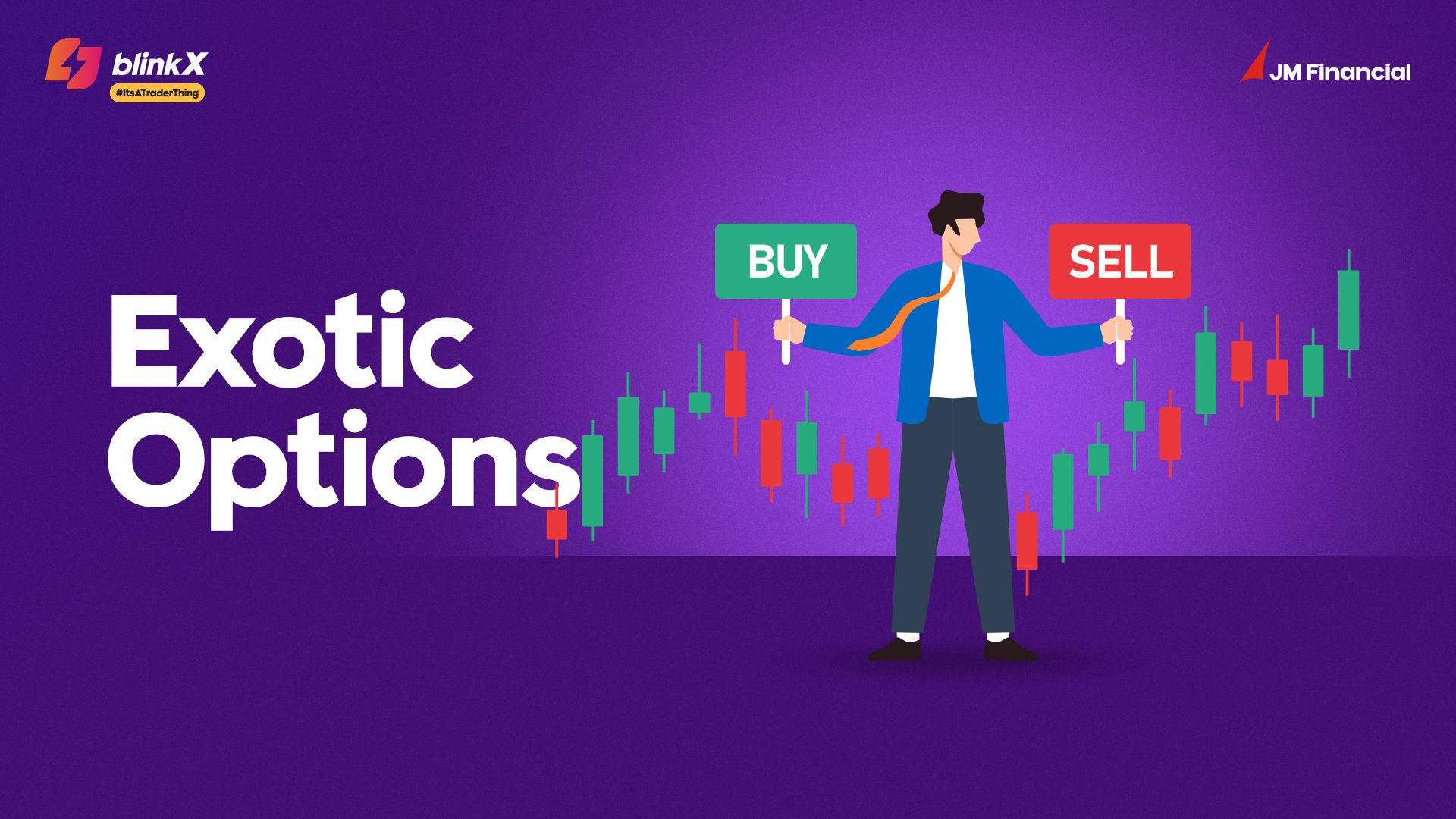 Understanding exotic options can help individuals learn about option contracts that include features different from standard exchange-traded options. Knowing the exotic options meaning and the types of exotic options can provide a better understanding of how these contracts are structured in financial markets.
What Are Exotic Options? - H2
Understanding the exotic options meaning begins with learning how these option contracts differ from standard options.
Exotic options are option contracts with customised features relating to payoff, exercise, or settlement.
Their terms are generally defined within the contract between the participating parties.
The structure of exotic options may vary depending on the underlying contract and applicable market practices.
Exotic Option vs Traditional Option
Comparing exotic options with traditional options helps explain their structural differences.
- Traditional options generally follow standardised contract specifications, whereas exotic options may include customised terms.
- Exotic options may have different payoff structures or exercise conditions than standard options.
- The availability and trading mechanism of these contracts depend on the applicable market and regulatory framework.
Types of Exotic Options
There are several types of exotic options, each designed with different contractual features and payoff structures.
- Barrier Options: Become active or inactive when the underlying asset reaches a specified price
- Asian Options: Their payoff is based on the average price of the underlying asset over a specified period.
- Binary (Digital) Options: Provide a predefined payoff if the specified contract conditions are met.
- Lookback Options: Determine the payoff based on the highest or lowest price of the underlying asset during the contract period.
- Chooser Options: Allow the holder to choose whether the option will function as a call or put option at a specified time.
- Basket Options: Derive their value from a group of underlying assets instead of a single asset.
- Compound Options: These are options on other option contracts.
- Bermudan Options: Can be exercised only on specified dates before expiry, as defined in the contract.
The availability of these types of exotic options depends on the relevant market, contract terms, and applicable regulations.
An Example of Trading Exotic Options
A simplified example can help explain the exotic options meaning for educational purposes.
- A market participant enters into a barrier option contract with predefined activation conditions.
- The contract terms determine how the option behaves if the specified price level is reached.
- This example is for educational purposes only and does not represent a recommendation or trading strategy.
- BlinkX launches ItsATraderThing Campaign
- blinkX Introduces 'Options Watchlist' to Empower Traders with Real-Time Insights
- BlinkX Enhances Trading with 24/7 Customer Support Capabilities
- Unlocking Seamless Trading: Introducing “Order Slicing” For The FnO Market
- A Game-Changer for Traders: Introducing Horizontal Watchlists
FAQs on Exotic Options
Are exotic options more expensive than traditional options?
The pricing of exotic options depends on factors such as their contractual features, underlying asset, market conditions, and valuation methodology.
Are exotic options suitable for all types of investors?
The suitability of any financial product depends on an individual's financial objectives, risk profile, understanding of the product, and applicable regulations.
Can exotic options be traded on exchanges?
Some exotic options may be traded in certain markets, while others are privately negotiated contracts, subject to applicable regulations and market practices.