
What is a Contract Note?




- ▶What is a Contract Note?
- ▶Meaning, Format & How to Interpret It in Trading
- ▶Understand Charges, Trades, and Compliance Details
- ▶The Practical Investor's Guide: How to Read Contract Note Layouts
- ▶Why You Must Regularly Interpret Contract Note in Trading Records?
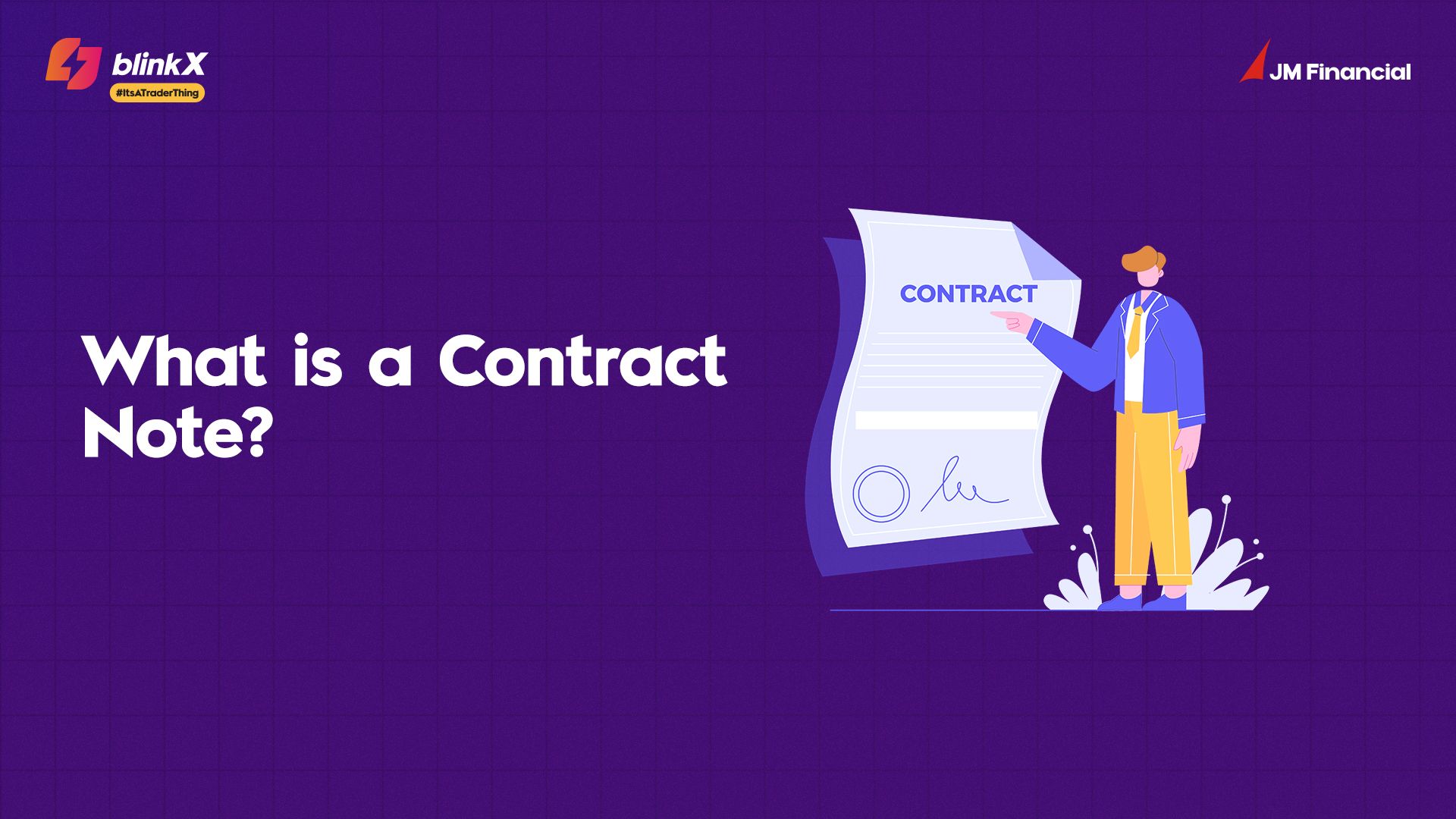
A contract note is the primary legally binding document issued by a registered stockbroker that summarises all buy and sell transactions executed on behalf of an investor on a given day. Acting as an official invoice, it certifies the completion of trades and details the precise breakdown of executing fees, levies, and net financial obligations.
What is a Contract Note?
Understanding what is contract note documentation entails recognizing it as an immutable receipt provided to clients by their brokerage firm at the end of every active trading day.
- Legal Confirmation: It functions as conclusive legal proof of the transactions carried out by an investor, protecting both the client and the broker against trade disputes.
- Daily Ledger Summary: The document consolidates all separate orders filled across the stock market into a singular, structured daily invoice rather than sending multiple separate confirmations.
- Mandatory Delivery: According to regulatory guidelines, brokers are legally required to issue an Electronic Contract Note (ECN) to the client’s registered email address within 24 hours of market closing.
Meaning, Format & How to Interpret It in Trading
Learning how to interpret a contract note in trading files allows market participants to evaluate their exact trade execution quality alongside complex statutory financial charges.
- Structural Blueprint: The top header strictly contains the broker's name, SEBI registration number, corporate office address, and the trader's Unique Client Code (UCC).
- Consolidated Trade Log: It maps out multi-exchange executions, using a unified Weighted Average Price (WAP) across different platforms like the BSE and NSE for specific securities.
- Net Payable or Receivable: The bottom summary cleanly declares the net amount you either owe the broker (indicated often in brackets) or are owed from your successful market transactions.
Understand Charges, Trades, and Compliance Details
Every official contract note in the stock market India operations lists transparent breakdowns of individual transaction fees alongside crucial, non-negotiable government taxes.
- Brokerage and Exchange Fees: The statement segregates the operational commission taken by your broker from the transaction fees charged directly by the stock exchanges.
- Statutory Government Levies: It explicitly records the Securities Transaction Tax (STT), Goods and Services Tax (GST) applied at 18% on brokerage, and local state stamp duties.
- Regulatory Compliance Oversight: The invoice features the official SEBI turnover fee and Investor Protection Fund (IPF) contributions required to keep your accounts regulatory compliant.
The Practical Investor's Guide: How to Read Contract Note Layouts
Navigating through your first digital trading invoice can feel overwhelming due to the dense grid of numeric values and specialised financial jargon. Mastering how to read contract note summaries ensures you retain complete operational control over your financial assets while avoiding common hidden fee oversights.
When you open the document, split your analysis into three sequential steps to efficiently verify the data:
Step 1: Confirming the Trade Authenticity
The primary table displays your active trades using precise identifying metrics. Each item lists a unique Order Number and an Exchange Trade ID assigned directly by the exchange server. Cross-reference these figures against your broker's app interface to confirm that your orders were successfully matched and executed at the precise market timestamps recorded.
Step 2: Evaluating the Weighted Average Price (WAP)
Under the updated SEBI standards for a contract note in the stock market in India, if your trading platform executes buy or sell orders for a particular stock across separate exchanges, it must present a combined single Weighted Average Price (WAP).
Step 3: Isolating Non-Contractual Account Expenses
While a contract note in the stock market in India serves as an exhaustive bill for exchange executions, it is critical to know what it deliberately leaves out. Account maintenance fees, delayed payment interests, funds transfer gateway fees, and Depository Participant (DP) charges for selling delivery shares will never appear inside this document.
Why You Must Regularly Interpret Contract Note in Trading Records?
Developing a consistent habit to periodically inspect and interpret contract note in trading statements is essential for maintaining portfolio health and ensuring transparency.
Catching Technical Discrepancies and Order Anomalies
Though automated trading software runs with high precision, rare algorithmic glitches or platform errors can happen. By understanding how to read contract note elements daily, you can quickly verify whether a limit order was filled at an unauthorized price or if a specific trade quantity was executed incorrectly.
Streamlining Your Income Tax Filings
When filing your annualised financial returns, your chartered accountant will heavily rely on these daily receipts. Because every contract note in stock market India details short-term or long-term delivery trades apart from high-frequency intraday positions, it acts as a foundational paper trail.
Combating Hidden Execution Costs
Reviewing what is contract note fee structures prevents dishonest intermediaries from tacking on unverified secondary costs. Since every regulatory fee, clearing charge, and tax item is printed transparently in its designated column, you can immediately observe how much your processing overhead is cutting into your net profitable trades.
- BlinkX launches ItsATraderThing Campaign
- blinkX Introduces 'Options Watchlist' to Empower Traders with Real-Time Insights
- BlinkX Enhances Trading with 24/7 Customer Support Capabilities
- Unlocking Seamless Trading: Introducing “Order Slicing” For The FnO Market
- A Game-Changer for Traders: Introducing Horizontal Watchlists
FAQs on What is a Contract Note?
What is a contract note in the stock market?
It is a legally binding document issued by a broker within 24 hours of a trade that serves as an official invoice and proof of all transactions executed on behalf of an investor.
Does a contract note include all trading charges?
Yes, it provides a transparent, itemized breakdown of the trade execution price, brokerage fees, and all statutory government levies like GST, STT, and stamp duty.
Why is it important to read and check your contract note daily?
Checking it daily allows you to verify trade execution accuracy, detect any unauthorized transactions or pricing errors, and maintain an authentic paper trail for tax audits.
What is the difference between a contract note and a ledger statement?
A contract note is a daily invoice detailing specific stock transactions and their immediate transaction costs, while a ledger statement is a continuous running account of all your fund deposits, withdrawals, and non-trade expenses.