
Greenshoe Option in IPO




- ▶What is a Greenshoe Option?
- ▶Why is it Also Called the Over-Allotment Clause?
- ▶How Does the Greenshoe Option Work in an IPO?
- ▶Types of Greenshoe Options
- ▶Objectives of Greenshoe Options
- ▶SEBI Rules Associated with Greenshoe Options
- ▶Stabilising Agent in an IPO
- ▶Greenshoe Option Example
- ▶Benefits of a Greenshoe Option
- ▶Does a Greenshoe Option Guarantee Good Listing Performance?
- ▶Greenshoe Option vs Over-Subscription
- ▶How Should Retail Investors Read a Greenshoe Clause?
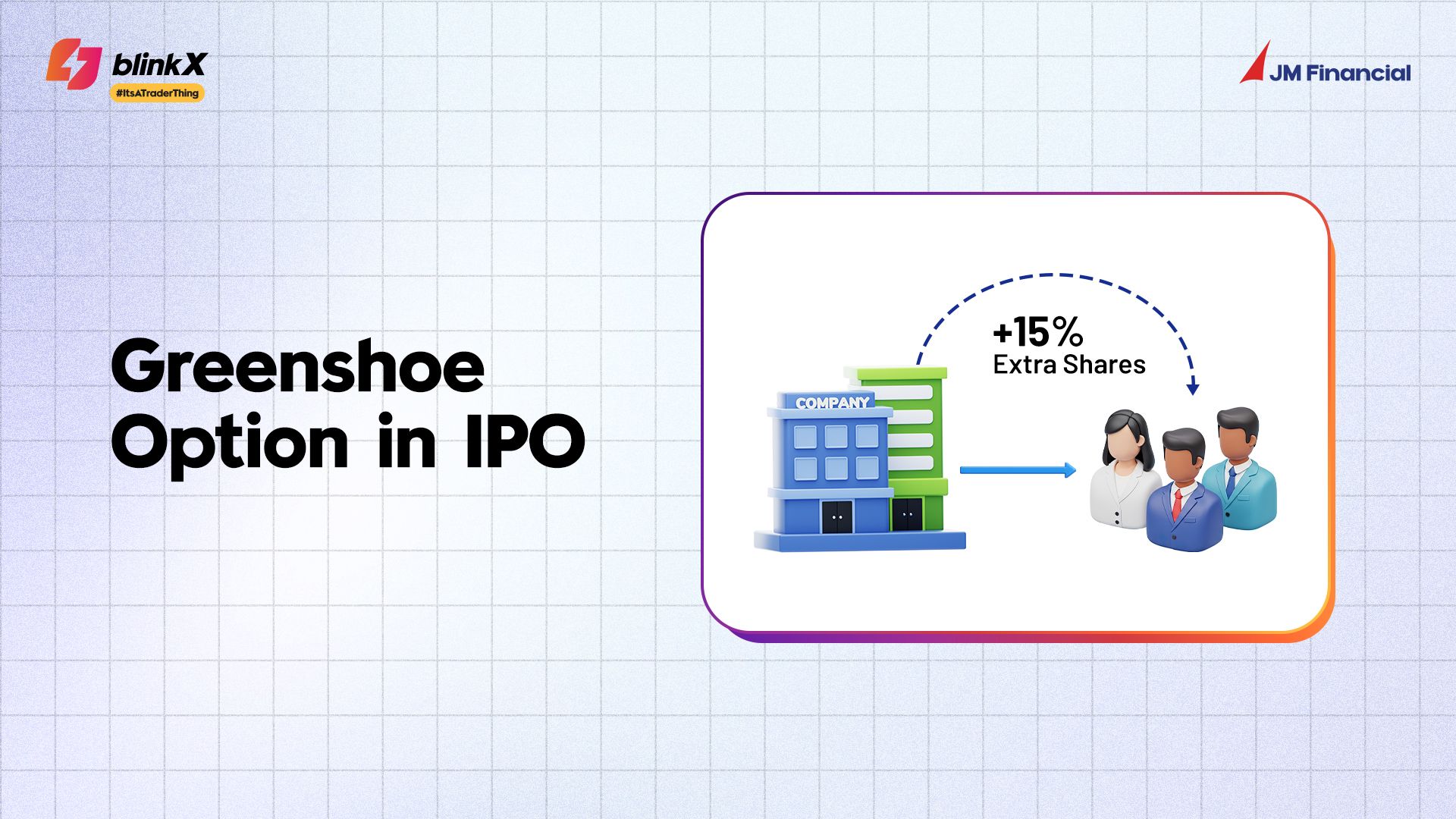
During a stock market listing, the share price of a company may fluctuate significantly in one direction or another, based on the demand within the stock market. The greenshoe option is the way in which such fluctuations are controlled. This enables the underwriter to issue 15% more stock than initially expected during the IPO process. These funds are used by the underwriters to purchase back the shares if the price goes down or buy more shares if the price goes up. It is very important to learn about greenshoe option meaning and its working for investors.
What is a Greenshoe Option?
Greenshoe option meaning is the provision in an underwriting contract for an initial public offering that enables the underwriters to sell up to 15 percent more shares than expected in case the demand is high. The option goes by the name over-allotment and has its origins in the Green Shoe Manufacturing Company, now called the Stride Rite Corporation, which was the first company to use such a price stabilizing device in an IPO in 1960.
Greenshoe option in IPO makes it possible for the stabilising agent to borrow the shares from the promoters, sell them through the IPO, and subsequently cover the position as per price behavior after listing.
Why is it Also Called the Over-Allotment Clause?
The over-allotment provision has been referred to as the greenshoe option due to its ability to allow the lead manager to offer more shares to the investors than the issuer initially offered. The proceeds collected from the additional share offering are put into an escrow account for not more than 30 days, where the funds will be used to repurchase the shares if their price drops below the price at which they were offered.
How Does the Greenshoe Option Work in an IPO?
The greenshoe option in IPO markets works via two situations after listing of the stocks:
Situation 1:
Increase in Stock Price: When the price of the stock increases above the issue price, the underwriter invokes greenshoe option and purchases more shares from the issuer at the initial IPO price. Thus, the short position is closed by the underwriter without making any profit or loss.
Situation 2:
Decline in Stock Price: In case the price of the stock declines below the issue price, the stabilizing agent uses the money placed in an escrow account and purchases shares from the open market. This would increase the demand and prevent further fall in the price.
Also Read: What is Options Trading in Derivatives?
Types of Greenshoe Options
Type | How it Works |
| Full | Underwriter buys the full additional 15% of shares from the issuer when prices remain high |
| Partial | Underwriter uses open market buybacks for some shares and buys remaining shorted shares from the company |
| Reverse | Underwriter sells shares back to the issuer to counter a severe post-listing price decline |
Objectives of Greenshoe Options
- Stabilising Prices: Underwriters repurchase shares that become cheaper than the issue price in the IPO.
- Managing Oversubscription: Helps underwriters handle high levels of demand without creating excessive price increases.
- Building Investor Confidence: Signals a managed company debut, reducing fear of immediate post-listing price drops.
- Capital and Flexibility: Provides the issuer flexibility to raise additional capital in high-demand scenarios without setting an excessively risky initial price.
SEBI Rules Associated with Greenshoe Options
Requirement | Detail |
| Authorisation | Approved by general meeting resolution and disclosed in offer document |
| Stabilising Agent | Lead manager must be formally appointed |
| Maximum Threshold | Over-allotment capped at 15% of total IPO shares |
| Time Limit | Option exercisable only within 30 days of listing |
| Disclosure | Usage must be clearly stated in the DRHP |
| Debt Issue Cap | Additional funds raised cannot exceed the original base issue size |
| Price Action | If price falls below offer price, stabiliser buys from market; if above, shares purchased from issuer |
Stabilising Agent in an IPO
The stabilising agent, usually the lead merchant banker, is responsible for executing the price stabilization IPO mechanism. Key aspects include:
- Uses escrow funds from over-allotment to buy back shares when prices fall below the issue price
- May buy back up to 15% of the total issue size, borrowing shares from promoters if needed
- Active only during the 30-day stabilisation period post-listing
- Appointment must comply fully with SEBI regulations
Greenshoe Option Example
Company X launches an IPO of 2 crore shares at Rs. 200 per share. With the greenshoe option, an additional 15%, or 30 lakh shares, can be issued. The underwriter sells 2.30 crore shares in total.
If the price rises to Rs. 220: The underwriter buys 30 lakh shares from Company X at Rs. 200, covering the short position. The company raises more capital while prices remain stable.
If the price falls to Rs. 190: The underwriter buys back 30 lakh shares from the market at Rs. 190, creating demand and preventing further decline. The underwriter gains Rs. 10 per share on the buyback.
Further practical example: if an IPO of 10 crore shares is oversubscribed, the company exercises the greenshoe option to issue an additional 1.5 crore shares, allowing more investors to receive allotment while raising more capital.
Benefits of a Greenshoe Option
- Price Stabilisation: Keeps the bottom price for the stock in place by repurchasing shares should the price drop below the offering price after listing.
- Lower Market Volatility: Absorbs excess selling pressure on the first days of trading.
- Higher Investor Confidence: The presence of a stability mechanism boosts participation rates and reduces post-listing anxiety.
- Higher Capital Raising: Allows the issuer to raise more funds by issuing additional shares during periods of strong demand.
- Efficient Market Balancing: Provides flexibility to meet oversubscription demand without setting an excessively high initial price.
Does a Greenshoe Option Guarantee Good Listing Performance?
No. The greenshoe option does not guarantee strong listing performance. It supports the share price near the offer price for 30 days post-listing by managing demand through active buybacks. However, if the company’s fundamentals or valuation are weak, the mechanism cannot prevent the stock from eventually settling at its natural market price once stabilisation ends. It manages volatility, it does not create value.
Greenshoe Option vs Over-Subscription
Key Aspect | Greenshoe Option | Oversubscription |
| Nature | Contractual clause in underwriting agreement | Market condition where demand exceeds supply |
| Objective | Stabilise share prices after listing | Indicator of high investor demand |
| Action Taken | Underwriters sell up to 15% more shares | Investors bid for more shares than available |
| Outcome | Price protection and broader allotment | Lower allotment chances for individual investors |
How Should Retail Investors Read a Greenshoe Clause?
- The presence of a greenshoe option signals anticipated high demand and a structured price support mechanism.
- It does not mean the IPO is risk-free or that listing gains are guaranteed.
- Check the DRHP to confirm greenshoe option disclosure and the identity of the stabilising agent.
- Understand that buyback activity in the secondary market post-listing is a normal, SEBI-regulated process.
- The 30-day window is critical. After it expires, the stock trades purely on fundamentals and market sentiment.
Conclusion
The greenshoe option is one of the best price stabilization IPO instruments available in contemporary capital markets. This allows the underwriters to sell more shares and use the money generated from the sale to purchase back stocks or buy stocks from the issuing company. The knowledge of the greenshoe option meaning, SEBI rules about using the greenshoe option, and situations when this instrument can be used will help the investor understand better how the IPO price stability is controlled in India. Knowledge of the greenshoe option in a DRHP will be a useful tool for the IPO investor.
- BlinkX launches ItsATraderThing Campaign
- blinkX Introduces 'Options Watchlist' to Empower Traders with Real-Time Insights
- BlinkX Enhances Trading with 24/7 Customer Support Capabilities
- Unlocking Seamless Trading: Introducing “Order Slicing” For The FnO Market
- A Game-Changer for Traders: Introducing Horizontal Watchlists
FAQs on Greenshoe Option in IPO
What is greenshoe option meaning in simple terms?
Greenshoe option meaning is the provision found in the underwriting agreement during an initial public offering (IPO) where the syndicate manager has the right to issue 15 percent extra shares than those initially agreed upon. The money raised will be used to repurchase the shares in case of a drop in price after listing.
What is the greenshoe option in IPO transactions?
The greenshoe option in IPO transactions is a price stabilisation mechanism where underwriters create a short position by selling over-allotted shares to the public. If the stock falls below the issue price, the agent buys back shares from the market to provide support. If the price rises, additional shares are purchased directly from the issuer.
How does price stabilization IPO work under the greenshoe option?
Price stabilization IPO works by having the stabilising agent actively buy shares from the secondary market using over-allotment funds when the stock falls below the issue price. This creates demand, reduces selling pressure, and keeps the price close to the offer price during the 30-day stabilisation window.
What are the SEBI rules for the greenshoe option in India?
SEBI requires issuer authorisation through a general meeting resolution, formal appointment of a SEBI-compliant stabilising agent, a maximum over-allotment cap of 15%, mandatory DRHP disclosure, and a 30-day exercise window from the listing date.
Does the greenshoe option guarantee a good IPO listing?
No. The greenshoe option does not guarantee premium listing performance or investor returns. It is a volatility management tool that supports the share price for 30 days post-listing. If the company’s fundamentals or valuation are weak, the mechanism cannot prevent the stock from settling at its natural market price once the stabilisation period ends.