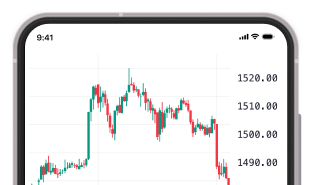
Nifty 100
₹-
0 (0%)
Nifty 100 Performance
Nifty 100 Historical Returns
Nifty 100 Sector Weightage
List of Nifty 100 Companies
| Company | Change% | Market Value |
|---|---|---|
| Asian Paints Ltd | -0.05% | 2,330.70 (-0.05%) |
| Bajaj Holdings & Investment Ltd | 0.60% | 11,265.00 (0.60%) |
| Britannia Industries Ltd | -1.24% | 4,705.00 (-1.24%) |
| Cipla Ltd | -0.08% | 1,324.10 (-0.08%) |
| CG Power & Industrial Solutions Ltd | 1.06% | 855.00 (1.06%) |
| Eicher Motors Ltd | 0.89% | 7,349.00 (0.89%) |
| Nestle India Ltd | -1.80% | 1,242.70 (-1.80%) |
| Ambuja Cements Ltd | 0.51% | 361.85 (0.51%) |
| Grasim Industries Ltd | -1.40% | 2,879.00 (-1.40%) |
| ABB India Ltd | 2.54% | 6,974.00 (2.54%) |
Market Cap
223315.63
125096.64
113328.53
107527.58
134561.24
2,330.70 (-0.05%)
11,265.00 (0.60%)
4,705.00 (-1.24%)
1,324.10 (-0.08%)
855.00 (1.06%)
About Nifty 100
Parent Organization
Nifty 100
Exchange
NSE
What is the Nifty 100 Index?
The Nifty 100 Index is a broad representation of the India Stock Market, tracking India's 100 largest and liquid stocks listed on the National Stock Exchange based on market value. The NIFTY 100 was intended to reflect the performance of larger stocks and provide a more comprehensive view than other, more specific indexes.
This index points to those companies which may be considered established, actively traded, and major participants in the Indian equity market. It is, therefore, often perceived that the Nifty 100 is an indicator of trends for this larger-cap category of companies too.
Nifty 100 Index Stock Selection Criteria
The selection of the Nifty 100 stock list is based on a well-structured, rules-driven process. In general, it proceeds as follows:
- Eligibility: Only firms listed and traded on the National Stock Exchange are eligible.
- Market Capitalisation: Stocks are sorted by the total market value to then highlight the largest players.
- Liquidity Test: Every applicant has to meet the minimum criteria with regard to liquidity, usually measured by the frequency and volume of trading.
- Free-Float Requirement: Only those stocks that have an adequate portion of their shares free for public trading are qualified for the selection process.
- Combination Approach: This index combines all members of the Nifty 50 and Nifty Next 50, which provide an aggregate total of 100 members.
- Periodic Review: The portfolio is reviewed periodically in order to maintain representativeness of the general market.
How Is the Nifty 100 Index Value Calculated?
The Nifty 100 Index is calculated using the free-float market capitalisation method. That is, only shares that are available for public trading are considered. Promoter holdings and locked-in shares are excluded. The free-float market value of all 100 companies is added together and compared with a base value.
Formula for Nifty 100 Index Calculation
Nifty 100 Index Value = Free-Float Market Capitalisation / (Base Free-Float Market Capitalisation × 1000)
As stock prices change, or when corporate actions take place, the index value adjusts. This method ensures the index reflects investable market value, not total ownership. In simple terms, the calculation focuses on what investors can actually buy and sell.
Performance of Nifty 100 Index
The performance of the Nifty 100 Index over different periods generally mirrors the behaviour of large-cap stocks in India. Over longer time frames, it has tended to reflect the growth patterns of established sectors such as banking, information technology, energy, and consumer goods.
Short-term trends might observe some fluctuations because of economic data, global market trends, and fundamentals based on certain sectors. Long-term trends are used to analyse overall market performance and leading Indian business reactions to economic cycles and policy and market sentiments. They do not forecast results for stocks individually but give a consolidate view of large cap market performance.
Factors to Consider Before Investing in Nifty 100 Index Stocks
Before delving into individual stocks that constitute Nifty 100, it would be important to understand a couple of basic factors that may affect outcomes over time.
- Market Risk: The index is exposed to overall equity market movements, meaning broader economic or global developments can impact most constituent stocks at the same time.
- Sector Concentration: Certain sectors may have higher representation in the index, which can influence performance during periods when those sectors experience favourable or adverse conditions.
- Volatility: Despite including large and established companies, the index can experience short-term price fluctuations due to changing market sentiment and external events.
- Sensitivity to Market Cycles: The index performance varies across economic cycles, reflecting growth during expansion phases and corrections during periods of economic slowdown or uncertainty.
Considering these factors can help investors assess whether exposure to the Nifty 100 Index aligns with their financial objectives, time horizon, and risk tolerance.
Who Should Track or Invest in the Nifty 100 Index?
The Nifty 100 Index is generally tracked by those investors who are interested in understanding the performance of large companies in India as a whole. It might fit those individuals who are not concentrating on select stock picking.
Long-term investors can rely on the index as a benchmark for evaluating their portfolio performance. Short-term traders may also follow the index to gain information about market trends. However, suitability depends on investment horizon, risk appetite, and overall financial planning objectives.
How Can You Invest in the Nifty 100 Index?
Direct investment in an index is not possible, but exposure can be gained through different market instruments:
- Index Funds: Mutual funds designed to replicate the composition and performance of the Nifty 100 Index.
- Exchange-Traded Funds (ETFs): Market-traded instruments that track the index and can be bought or sold during trading hours.
- Derivatives: Futures and options linked to the index, typically used by experienced participants for hedging or trading purposes.
Each route carries its own structure, costs, and risks, which should be understood before participation.