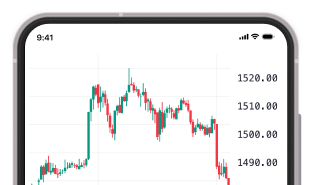
Nifty FMCG
₹-
0 (0%)
Nifty FMCG Performance
Nifty FMCG Historical Returns
Nifty FMCG Sector Weightage
List of Nifty FMCG Companies
| Company | Change% | Market Value |
|---|---|---|
| Britannia Industries Ltd | -0.72% | 4,745.60 (-0.72%) |
| Colgate-Palmolive (India) Ltd | -1.23% | 1,735.70 (-1.23%) |
| Nestle India Ltd | -0.38% | 1,319.00 (-0.38%) |
| Hindustan Unilever Ltd | -1.12% | 1,844.50 (-1.12%) |
| ITC Ltd | -4.03% | 255.00 (-4.03%) |
| Tata Consumer Products Ltd | -1.71% | 951.90 (-1.71%) |
| Godfrey Phillips India Ltd | -4.91% | 1,771.00 (-4.91%) |
| Patanjali Foods Ltd | -1.65% | 355.00 (-1.65%) |
| Radico Khaitan Ltd | -1.78% | 4,415.00 (-1.78%) |
| Dabur India Ltd | -1.76% | 376.80 (-1.76%) |
Market Cap
114603.93
47325.5
254537.49
432841.7
318337.79
4,745.60 (-0.72%)
1,735.70 (-1.23%)
1,319.00 (-0.38%)
1,844.50 (-1.12%)
255.00 (-4.03%)
About Nifty FMCG
Parent Organization
Nifty FMCG
Exchange
NSE
What is the Nifty FMCG Index?
The Nifty FMCG Index represents the performance of Fast Moving Consumer Goods companies on the National Stock Exchange. These are businesses that manufacture everyday products like soaps, shampoos, packaged foods, beverages, and household items, things people buy regularly, regardless of economic ups and downs. Up to 15 companies from the Nifty 500 form this index, selected using free-float market capitalisation.
For investors tracking India's consumption story, the Nifty FMCG index works as a reliable indicator. FMCG sales remain relatively stable across economic cycles; even during downturns, people continue buying daily essentials. This defensive characteristic makes the index relevant for those seeking steady exposure to consumer spending patterns.
Nifty FMCG Index Stock Selection Criteria
Selection happens through a structured process, and it is reviewed twice yearly.
- Eligible Companies: Must be part of Nifty 500 at the time of review. If fewer than 10 FMCG companies qualify from Nifty 500, the deficit is filled from the top 800 companies ranked by trading volume and market capitalisation.
- Sector Alignment: Eligibility is restricted to FMCG companies. This covers personal care, packaged foods, beverages, household products, and tobacco firms.
- Market Activity: A trading frequency of 90% over the past six months is mandatory, ensuring adequate liquidity.
- Listing Tenure: Companies need just one month of listing history at the cutoff date, enabling relatively quick inclusion of new listings.
- Selection Logic: Out of eligible stocks, the top 15 by free-float market capitalisation are selected. Free-float means publicly tradable shares, leaving out what promoters hold.
- Review Schedule: Index composition gets updated semi-annually based on data through January 31 and July 31. Market participants receive four weeks' notice before changes take effect.
How is the Nifty FMCG Index Value Calculated?
The Nifty FMCG share price calculation uses free-float market cap weighting. Here's the formula:
Index Value = (Current Free-Float Market Cap ÷ Base Market Cap) × Base Index Value
Starting from January 1, 1996, the index began at a base value of 1000. Throughout trading hours, it recalculates continuously.
Determining each company's contribution involves multiplying publicly available shares by current share price. Summing these across all 15 constituents forms the index level.
To avoid concentration, weights face restrictions. No single company can represent more than 33% of the index, while the three largest combined cannot cross 62%. These caps undergo quarterly reviews.
Performance of Nifty FMCG Index
FMCG stands apart as a defensive sector. Basic consumption items stay in demand whether GDP grows at 8% or drops to 4%. This creates a stabilising effect on portfolio performance.
When economic conditions improve, the sector still participates in growth. Higher incomes push consumers toward premium variants. Someone switches from regular soap to herbal options, or from loose tea to branded packets. Companies respond by expanding product lines and penetrating deeper into rural markets.
The industry is less affected in times of economic slowdowns. Although the rate of growth may be moderate, the sales volume is normally stable. The companies focus on cost, mini-packs, and rural reach to maintain their market share.
In the longer-term, the Nifty FMCG chart shows the trends that are emerging, like the increase in rural incomes, dietary habits, the challenge of digital-first brands, and the impact of raw material inflation.
Factors to Consider Before Investing in Nifty FMCG Index Stocks
Consider following before investing:
- Valuation Premiums: Quality FMCG stocks often trade at higher price-to-earnings multiples, reflecting their stability and predictable cash flows.
- Input Cost Volatility: The raw material price of palm oil, chemicals, or packaging materials may impact corporate profitability when there are inflation trends.
- Competition Intensity: The sector faces pressure from both established competitors and new-age direct-to-consumer brands disrupting traditional categories.
- Heavy Concentration: Despite capping rules, a few large market leaders dominate the index and drive most movements.
- Market Risk: Like all equity indices, there's no downside protection. The index declines when markets fall, though often less sharply than cyclical sectors.
The index offers stability-focused exposure but requires understanding these factors.
Who Should Track or Invest in the Nifty FMCG Index?
This index aligns well with certain investor profiles:
- Those building portfolios with a specific core allocation
- Investors prioritising stability over aggressive growth
- People wanting exposure to India's consumption trends without individual stock risk
- Portfolio managers looking to reduce overall volatility
- Long-term investors comfortable with moderate but consistent returns
Nifty FMCG stocks appeals to both individual and institutional investors, particularly those in or approaching retirement who value capital preservation alongside reasonable growth. Expect steadier performance with fewer swings than growth-oriented indices.
How Can You Invest in the Nifty FMCG Index?
Since direct index investment isn't possible, three pathways offer exposure:
- Index Mutual Funds: These mirror the index holdings and deliver returns that track the index after accounting for management fees. Suitable for investors who aim long term.
- Exchange-Traded Funds: Trade throughout market hours just like individual stocks, offering flexibility to enter and exit positions as needed. Active traders prefer this route.
- Futures and Options: Provide leverage and hedging capabilities but require understanding of derivatives mechanics and risk management. Designed for experienced market participants.
Your selection should align with how actively you plan to manage the investment and your familiarity with different instruments.