Nifty PSU Bank
₹-
0 (0%)
Nifty PSU Bank Performance
Nifty PSU Bank Historical Returns
Nifty PSU Bank Sector Weightage
List of Nifty PSU Bank Companies
| Company | Change% | Market Value |
|---|---|---|
| State Bank of India | 0.27% | 962.60 (0.27%) |
| Bank of Baroda | 1.05% | 230.40 (1.05%) |
| Canara Bank | 1.00% | 118.29 (1.00%) |
| UCO Bank | 0.72% | 23.73 (0.72%) |
| Union Bank of India | -0.58% | 171.68 (-0.58%) |
| Central Bank of India | 0.32% | 30.88 (0.32%) |
| Bank of Maharashtra | -0.46% | 79.79 (-0.46%) |
| Bank of India | 1.50% | 132.36 (1.50%) |
| Punjab & Sind Bank | 0.24% | 21.29 (0.24%) |
| Indian Overseas Bank | 0.81% | 30.99 (0.81%) |
Market Cap
887722.84
118941.33
107577.92
29781.45
131298.02
962.60 (0.27%)
230.40 (1.05%)
118.29 (1.00%)
23.73 (0.72%)
171.68 (-0.58%)
About Nifty PSU Bank
Parent Organization
Nifty PSU Bank
Exchange
NSE
What is the Nifty PSU Bank Index?
The Nifty PSU Bank Index represents the performance of public sector banks where the Government of India holds at least 51% ownership. The Nifty PSU Bank mainly operate in retail lending, corporate, agriculture, and public welfare-related services.
The index was developed as a benchmark for the PSU banking stock segment. Investors no longer have to track the various bank stocks separately since the index helps them assess the overall sector movements, risk and performances trends of the entire banking sector.
As interest in sector-based and thematic investing has grown, the Nifty PSU Bank Index has become an important reference point for funds and traders focusing on public sector banking opportunities.
Nifty PSU Bank Index Stock Selection Criteria
The selection of stocks for the Nifty PSU Banks Index follows a clear, rule-based process defined by the NSE. This ensures transparency, consistency, and investability. The selection process can be understood step by step.
Step 1: Public Sector Bank Eligibility
Only public sector banks are eligible for inclusion. To qualify, the government must hold at least 51% ownership in the bank. This ensures that the index strictly represents the PSU banking segment.
Step 2: Market Capitalisation Filter
Eligible PSU banks are ranked based on market capitalisation and turnover over the previous six months. From this group, only companies that fall within the top 800 stocks by market capitalisation are considered further.
Step 3: Liquidity Screening
Liquidity is a key requirement to ensure smooth trading and accurate index tracking. Stocks must have a minimum trading frequency of 90% during the last six months. This reduces the impact of illiquid stocks and improves index stability.
Step 4: Listing History Requirement
Companies must have a minimum listing history of one month as of the cutoff date. This avoids the inclusion of very new listings that may not have established trading patterns.
Step 5: Final Selection of Constituents
Based on these filters, the most representative and liquid PSU banks are selected for inclusion. This process helps the index remain a reliable indicator of the public sector banking industry while limiting unnecessary volatility from thinly traded stocks.
How is the Nifty PSU Bank Index Value Calculated?
The NIFTY PSU Index is calculated by the free-float market capitalisation weighted method. This means that only shares available for public trading are considered, excluding promoter and government-held shares.
Index Value = Current Free-Float Market Capitalisation ÷ (Base Free-Float Market Capitalisation × Base Index Value)
First, the free-float market capitalisation of each constituent bank is calculated. These values are then added together to arrive at the total index market capitalisation.
The index is reviewed semi-annually, based on six months of data ending in January and July. Any changes to constituents are implemented from the last trading day of March and September. Adjustments are made to ensure that corporate actions such as mergers or stock changes do not artificially impact index movements.
Since the index is weighted by size, larger PSU banks have a greater influence on index movements compared to smaller ones.
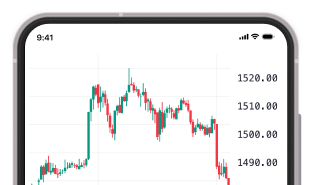
Performance of Nifty PSU Bank Index
The performance of the Nifty PSU Bank share price is closely linked to broader economic conditions, interest rate cycles, and government banking reforms. During periods of strong credit growth and improving asset quality, PSU bank stocks tend to perform well, supporting index gains.
In contrast, during economic slowdowns or periods of rising non-performing assets (NPAs), the index can experience sharp corrections. As a result, the index is often more volatile than diversified market indices, reflecting the cyclical nature of the banking sector.
Over time, the index highlights trends in public sector banking such as capital infusion, loan growth, and regulatory changes.
Factors to Consider Before Investing in Nifty PSU Bank Index Stocks
Before making an investment in products related to Nifty PSU Bank Index, investors should keep in mind:
- Sector Concentration Risk: The index is entirely concentrated on PSU Banks, and therefore the index could be sensitive to any developments that could occur in the specific sector.
- Higher Volatility: Banking stocks tend to demonstrate extreme sensitivity to changes in interest rates, policies, and economic announcements.
- Cyclical Performance: The returns may depend on an economic or credit cycle rather than a steady growth path.
- Regulatory/Policy Impact : Regulatory policies, reform strategies, and governmental decisions can significantly influence performance.
While the index offers targeted exposure, it also tend to carry increased risk compared to broad-based indices.
Who Should Track or Invest in the Nifty PSU Bank Index?
The Nifty PSU Bank Index may be suitable for investors and traders who:
- Want focused exposure to public sector banks
- Actively track economic and banking sector trends
- Are comfortable with short- to medium-term volatility
- Use sectoral indices for tactical or thematic investing
It is generally more suitable for experienced investors rather than conservative or first-time equity investors.
How Can You Invest in the Nifty PSU Bank Index?
Individuals cannot invest directly in the index, but there are several ways to gain exposure:
- ETFs: Exchange-Traded Funds tracking the index can be bought and sold on the NSE like regular shares.
- Index Funds: Mutual funds that replicate the index portfolio and aim to match its returns before expenses.
- Derivatives: Futures and options linked to the index are used mainly by traders for short-term strategies or hedging.
The choice depends on investment goals, risk appetite, and time horizons.