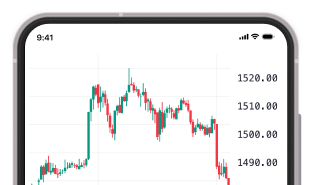
Nifty IT
₹-
0 (0%)
Nifty IT Performance
Nifty IT Historical Returns
Nifty IT Sector Weightage
List of Nifty IT Companies
| Company | Change% | Market Value |
|---|---|---|
| Wipro Ltd | 5.95% | 184.40 (5.95%) |
| Infosys Ltd | 4.61% | 1,161.20 (4.61%) |
| Mphasis Ltd | 1.91% | 2,500.00 (1.91%) |
| Tata Consultancy Services Ltd | 4.89% | 2,465.00 (4.89%) |
| HCL Technologies Ltd | 1.47% | 1,380.00 (1.47%) |
| Oracle Financial Services Software Ltd | 1.33% | 10,386.00 (1.33%) |
| Tech Mahindra Ltd | 8.48% | 1,790.00 (8.48%) |
| LTM Ltd | 3.66% | 4,390.00 (3.66%) |
| Persistent Systems Ltd | -1.70% | 5,741.00 (-1.70%) |
| Coforge Ltd | 0.91% | 1,951.90 (0.91%) |
Market Cap
172057.34
450874.53
46878.06
851860.62
369953.96
184.40 (5.95%)
1,161.20 (4.61%)
2,500.00 (1.91%)
2,465.00 (4.89%)
1,380.00 (1.47%)
About Nifty IT
Parent Organization
Nifty IT
Exchange
NSE
What Is the Nifty IT Index?
The Nifty IT Index shows how India’s information technology (IT) sector is performing on the National Stock Exchange (NSE). It includes 10 major IT companies, such as software developers and IT services firms. Together, these companies represent India’s role as a global technology services provider, serving clients across the world.
The index uses January 1, 1996 as its base date. It first started with a base value of 1000, which was later revised to 100 in May 2004. At that time, India’s IT sector was growing beyond basic outsourcing into software development and consulting. The index was created to track this growing industry in a structured way.
How are Stocks Selected for the Nifty IT Index?
The index follows a fixed and transparent selection process, reviewed twice every year.
- Parent Index Requirement: Companies must be part of the Nifty 500 to be considered. If fewer than 10 IT stocks are available there, the selection expands to the top 800 companies based on size and trading activity.
- Sector Classification: Only companies officially classified under the IT sector are eligible. This includes software services, IT consulting, and technology infrastructure firms.
- Liquidity Requirement: Stocks must trade on at least 90% of trading days over the past six months. This ensures easy buying and selling for investors.
- Listing History: A company needs to be listed for only one month before the review date. This allows new IT companies to enter the index faster.
- Final Selection: Among all eligible stocks, the top 10 companies by free-float market capitalisation are selected. Preference is given to stocks available in the Futures and Options segment.
- Review and Changes: Reviews happen in January and July using data up to the end of those months. Any changes are announced four weeks in advance.
How is the Nifty IT Index Calculated?
The index uses the free-float market capitalisation method.
Index Value = (Total Free-Float Market Cap of All Stocks ÷ Base Market Cap) × Base Value
Only shares available for public trading are counted. The market value of all 10 companies is added together and compared with the base value.
The index updates in real time during market hours.
To avoid over-dependence on one company:
- No single stock can exceed 33% weight
- The top three combined cannot exceed 62%
Since there are only 10 stocks, price changes in large companies can strongly affect the index.
What Does the Nifty IT Index Performance Reflect?
The index mainly reflects global IT spending trends, outsourcing demand and currency movement, especially the rupee against the dollar
When global companies spend more on technology, Indian IT firms usually benefit. When global growth slows, project delays and budget cuts can reduce earnings.
Currency also plays a big role. Most IT companies earn in foreign currencies. A weaker rupee increases rupee earnings, while a stronger rupee can reduce profit margins.
The sector saw strong growth after the pandemic due to digital demand, followed by slower growth as markets stabilised.
Overall, the Nifty IT index NSE is more volatile than defensive sectors but more stable than many small-cap stocks.
Things to Keep in Mind Before Investing
Before choosing Nifty IT–based investments, consider the following factors:
- High Export Dependence: A significant majority of the companies included in the list have a high dependence on exports and generate a considerable portion of their revenue from countries such as the US, Europe, and others.
- Currency Impact: Variations in exchange rates, particularly rupee/US dollar fluctuations, have an impact on the profits gained by companies, irrespective of the stable business volume generated.
- Cost Pressures: Salary rises; hiring costs, and other operational costs may impact profit margins as competition for skilled labour may be relatively high.
- Technology Changes: The IT sector is an increasingly dynamic industry, and there is a need for continuous investments in developing new skills, platforms, and services.
- Client Risk: There are certain businesses that rely heavily on a few larger clients, and as a result, losing a major client or having to negotiate prices could have an effect on the company.
- Valuation Swings: IT stocks usually appear to have a relatively higher price level compared to their growth prospects; stocks experience a significant drop in price when expectations do not meet their actual performance.
Since the Nifty IT index today focuses on only one sector, it does not provide wide diversification and may be more sensitive to sector-specific trends.
Who Usually Tracks or Invests in the Nifty IT Index?
This index may suit investors who:
- Want focused exposure to the IT sector
- Expect higher global tech spending
- Prefer sector investing without choosing individual stocks
- Are comfortable with short-term price swings
- Aim for long-term growth
It may not suit conservative investors who prefer steady returns and lower risk.
How Can You Invest in the Nifty IT Index?
You cannot invest directly in the index, but you can use these options:
- Index Mutual Funds: These funds copy the Nifty IT index live and are suitable for long-term investing and SIPs.
- Exchange-Traded Funds (ETFs): ETFs trade like shares on the stock exchange and allow flexible buying and selling.
- Derivatives: Futures and options are used for short-term strategies or hedging by experienced investors.
The right option depends on how long you plan to invest and how actively you manage your portfolio.